Imom Buxoriy xalqaro ilmiy-tadqiqot markazi bukhari.uz


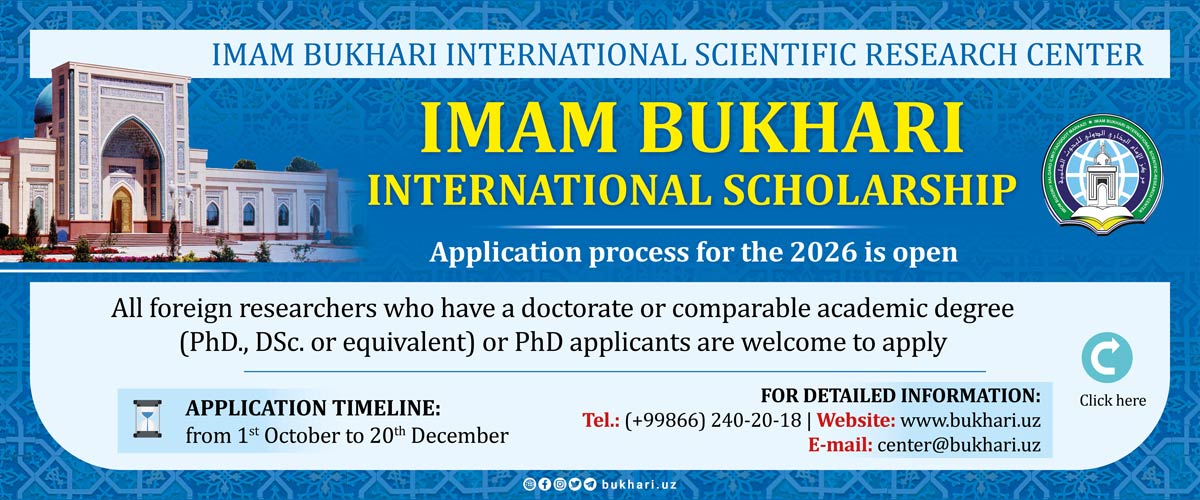


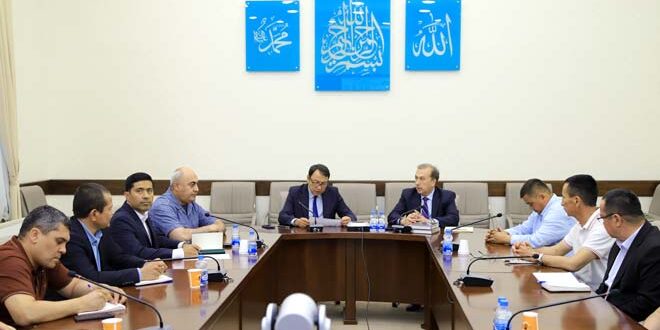
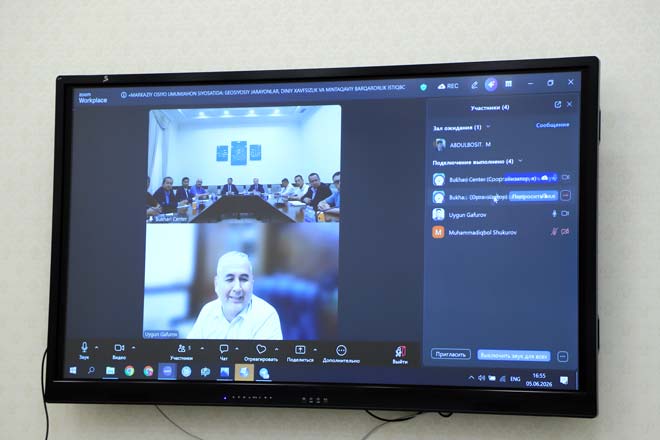
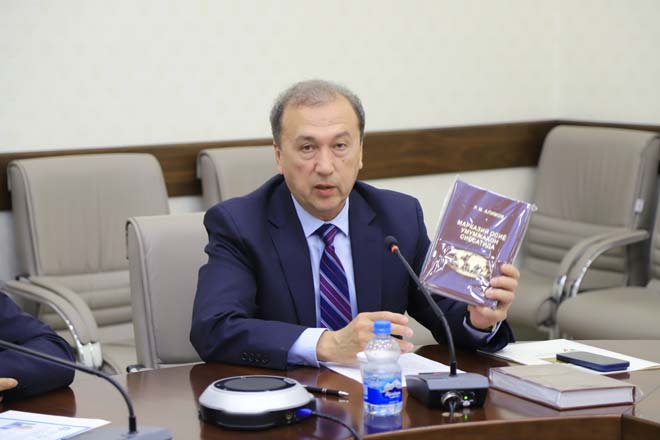
The series of international online academic seminars entitled “Islam as a Religion of Peace and Enlightenment,” initiated by the International Islamic Academy of Uzbekistan’s Imam Bukhari International Scientific Research Center under the motto “Enlightenment against Ignorance,” is being consistently continued. Within the framework of this initiative, the second international online seminar was held with the participation of representatives from the Center, the Kazakhstan Institute for Geopolitical Studies, the AQNIET Information, Outreach and Rehabilitation Center, and the Research Centre for Islamic History, Art and Culture (IRCICA). During the event, Professor Ravshan Alimov, Doctor of Political Science and Head of Department at the Diplomatic Academy under the University of World Economy and Diplomacy, delivered a lecture entitled “Central Asia in Global Politics: Geopolitical Processes, Religious Security, and Prospects for Regional Stability” and presented his newly published book under the same title. The seminar brought together leading scholars, experts, and researchers from Uzbekistan, Kazakhstan, Türkiye, and other countries.
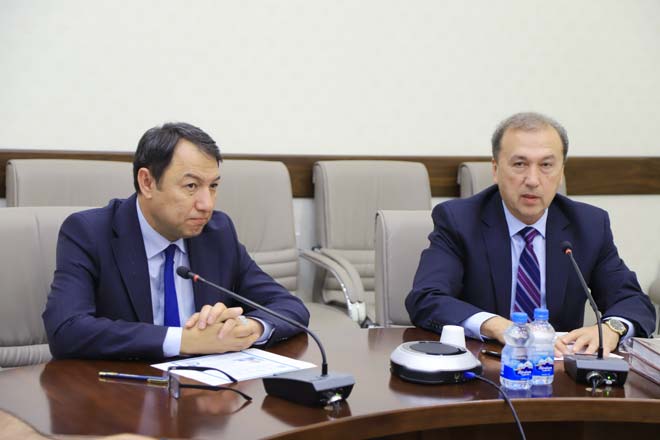
The lecture provided an in-depth analysis of Central Asia’s strategic position within the contemporary system of international relations, the existing threats in the sphere of religious security, and the scientific and educational approaches to addressing them. In his presentation, Professor R. Alimov placed particular emphasis on the fact that Central Asia has today emerged as an important center and strategic crossroads of global politics. With a territory covering approximately 4 million square kilometers and a population of around 85 million, the region possesses substantial natural resources and significant transport and communication potential. As noted during the lecture, Kazakhstan accounts for nearly 40 percent of global uranium production. Turkmenistan ranks among the world’s top five countries in terms of proven natural gas reserves, estimated at 11.3 trillion cubic meters. Uzbekistan holds a leading position globally in uranium, copper, and gold reserves, while Tajikistan ranks second in the world market for antimony production. Such considerable economic capacity, combined with strategically important transit corridors, is transforming Central Asia into a geopolitical arena where the interests and competition of major power centers increasingly converge.
The seminar also presented a comparative analysis of the dynamics of religious infrastructure development across Central Asia during the years of independence. It was noted that each country has developed its own distinctive model in managing religious affairs. Kazakhstan has maintained a balance between secular governance and religious development, whereas Kyrgyzstan has experienced rapid religious revival, with the number of mosques approaching 4,000. Tajikistan, operating within a highly religious social environment and sharing a border with Afghanistan, has pursued a policy of strict regulatory oversight. In Turkmenistan, religiosity tends to manifest predominantly through national traditions. Uzbekistan, in turn, has advanced an “Enlightened Islam Model” grounded in the traditional Hanafi and Maturidi intellectual heritage. In countering extremism, priority has been placed not on coercive measures but on preventive policies, liberalization, and the development of pilgrimage tourism, an approach that has been recognized by international experts as one of the most balanced policy models.
The lecture further identified the dissemination of media content by transnational extremist organizations in local languages as a significant contemporary threat. Professor R. Alimov emphasized that modern extremist groups have increasingly shifted their primary sphere of activity to digital platforms—including Telegram, YouTube, and TikTok—arguing that the principal front of security is no longer located at physical borders but within the information domain. Concluding the seminar, participants rejected the assumption that increasing religiosity inevitably leads to extremism and underscored that religious literacy and educational engagement constitute the most effective form of resilience against radical ideologies.
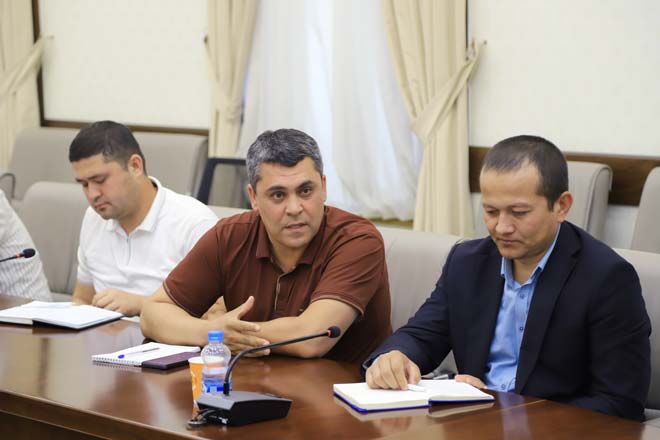
The future stability of the region will be ensured not through the use of force, but through the promotion of knowledge, enlightenment, and social justice, as well as by preventing the region from becoming an arena of competition among external powers. Sustainable regional development depends on the solidarity of the five Central Asian states and their collective aspiration toward deeper integration and the establishment of a unified market.
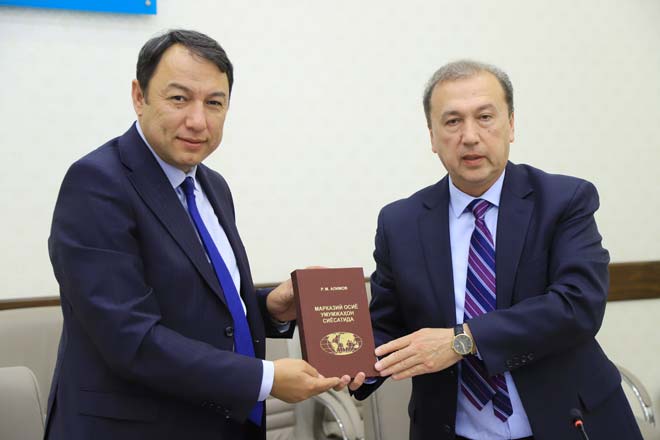
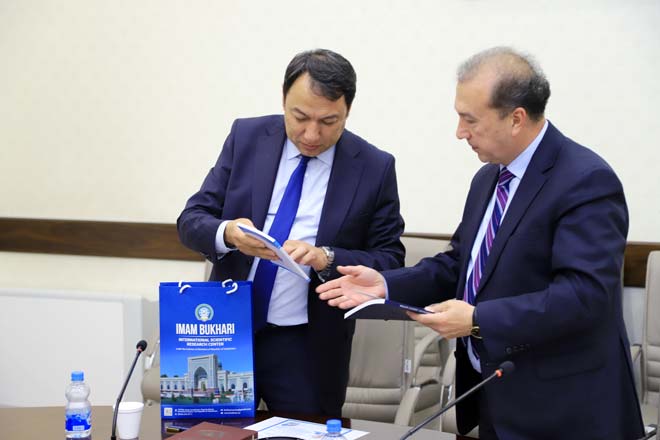
The participants highly appreciated the scholar’s systematic analyses, conclusions, and newly published book, noting that research in this field would serve as an important foundation for further strengthening the regional security architecture.
Imam Bukhari International Scientific Research Center
Press Service