Imom Buxoriy xalqaro ilmiy-tadqiqot markazi bukhari.uz

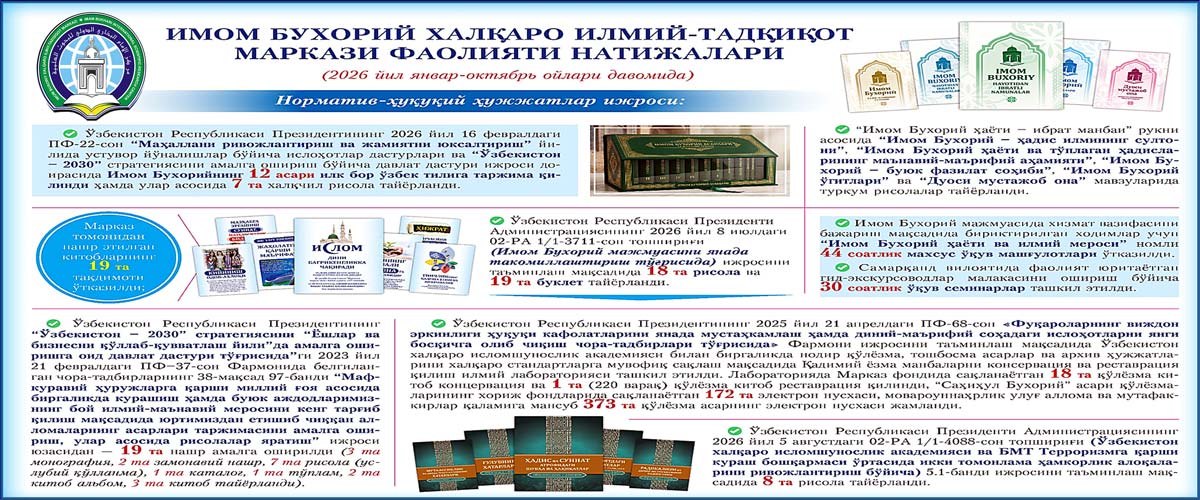
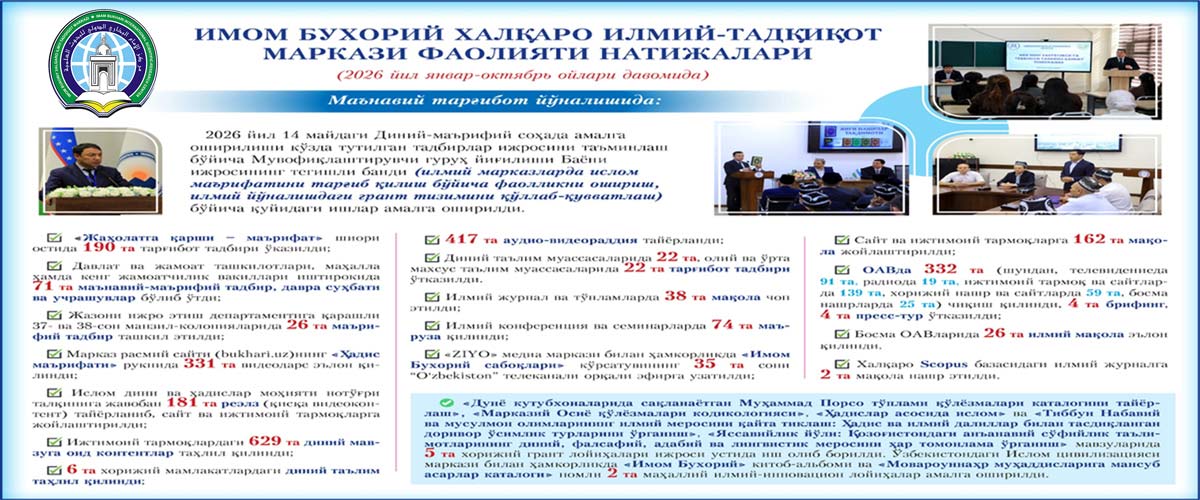
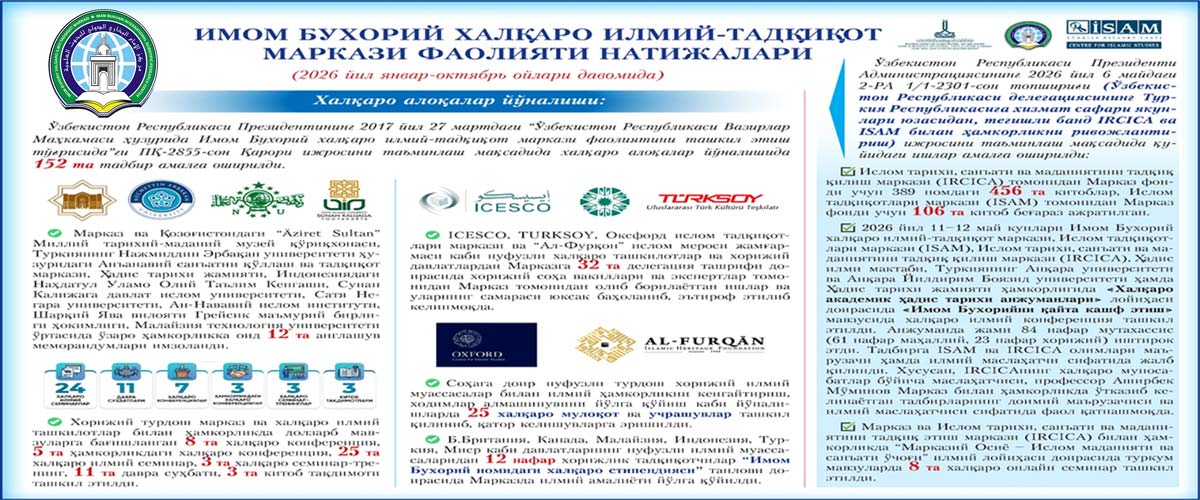
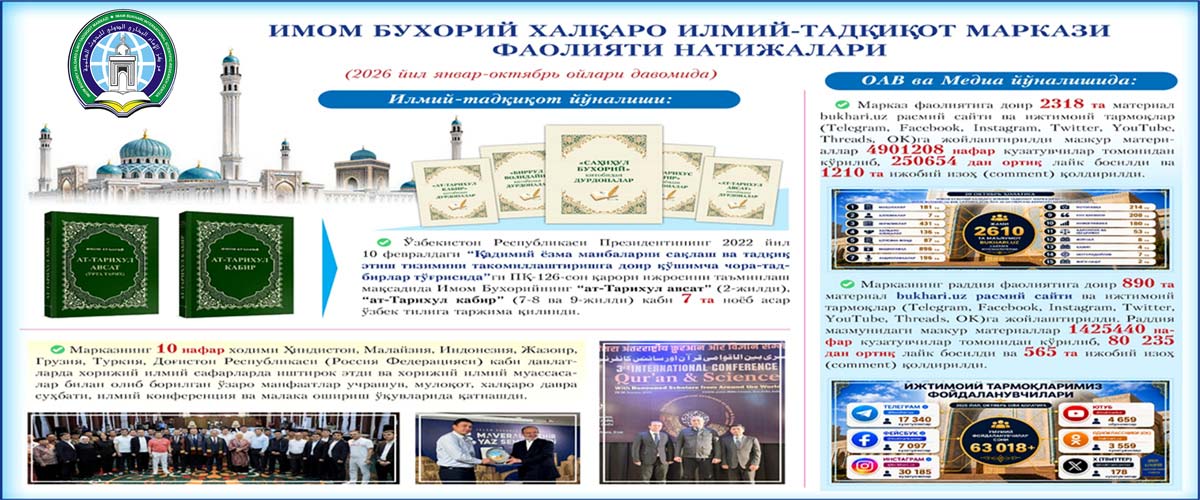


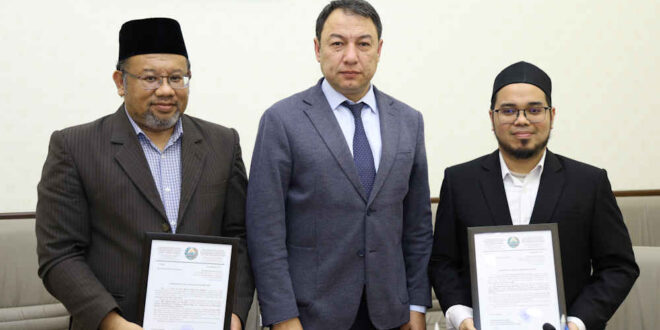
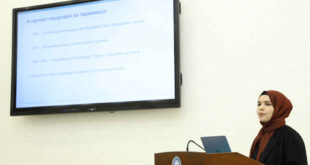
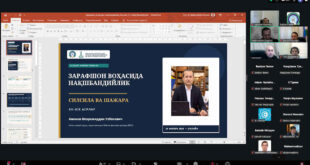
Recipients of the Imam Bukhari International Scholarship, Mohd Shahir bin Hashim, a researcher at the Research Division of the Department of Islamic Development Malaysia (JAKIM), and Muhammad Uzair bin Izham, an Islamic affairs researcher, presented the findings of their research conducted at the Imam Bukhari International Scientific Research Center. Their presentations highlighted the relevance of Imam Bukhari’s methodological approaches to addressing contemporary global challenges, education and crisis management.
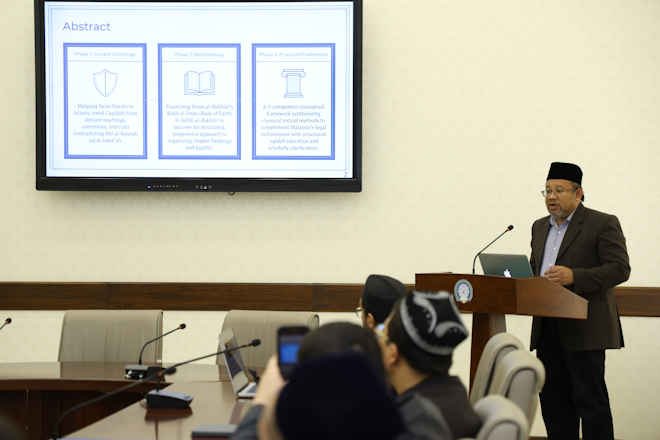
Mohd Shahir bin Hashim focused on strengthening authentic Islamic beliefs and enhancing educational measures to counter religious deviations in Malaysia through an analysis of the chapter headings and the arrangement of hadiths in Kitab al-Iman (The Book of Faith) of Sahih al-Bukhari, a title commonly given to major sections of renowned works on Islamic sciences and hadith collections.
The researcher emphasized that efforts to counter the spread of destructive and alien ideologies should extend beyond legal and administrative measures to incorporate a systematic, gradual approach to education and awareness-raising grounded in the Qur’an and authentic hadiths. His proposed five-stage approach emphasizes reliance on primary sources, strengthening the foundations of Islamic belief, defining clear objectives for each topic, ensuring the systematic transmission of knowledge, and reinforcing key concepts through various hadith narrations.
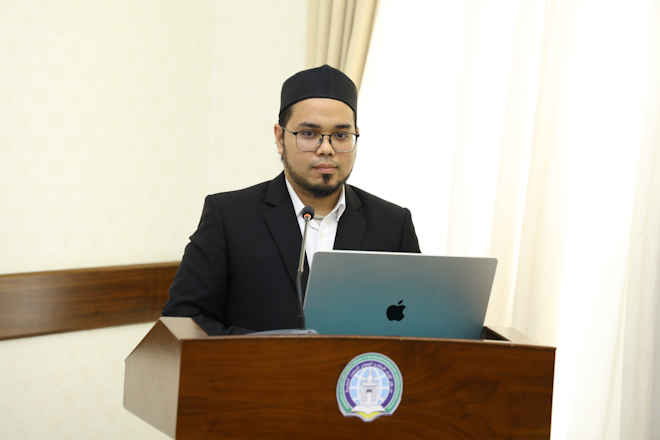
Muhammad Uzair bin Izham presented the S-H-U-R-A crisis management model, which promotes collective decision-making through consultation. The model was developed based on Imam Bukhari’s fiqh al-tarjamah (the jurisprudential and methodological reasoning underlying chapter headings), sections of Sahih al-Bukhari addressing consultation and governance, and classical commentaries such as Fath al-Bari and Umdat al-Qari.
The researcher emphasized that conventional material and technical crisis management models are insufficient in an increasingly challenging global environment characterized by external volatility, uncertainty, complexity and ambiguity (VUCA), as well as internal psychological and social vulnerabilities associated with brittleness, anxiety, nonlinearity and incomprehensibility (BANI).
The proposed model integrates Islamic ethical principles into governance and psychological resilience, promoting solidarity, harmony, unity, resolve and accountability in governance, alongside resilience, humanity, mutual understanding, responsiveness and adaptability in addressing psychological challenges.
Following the presentations, participants exchanged views on the prospects of integrating Imam Bukhari’s rich scholarly and methodological heritage into contemporary educational programmes, educational rehabilitation modules and governance practices. They also emphasized that these research initiatives would contribute to further strengthening international academic cooperation.
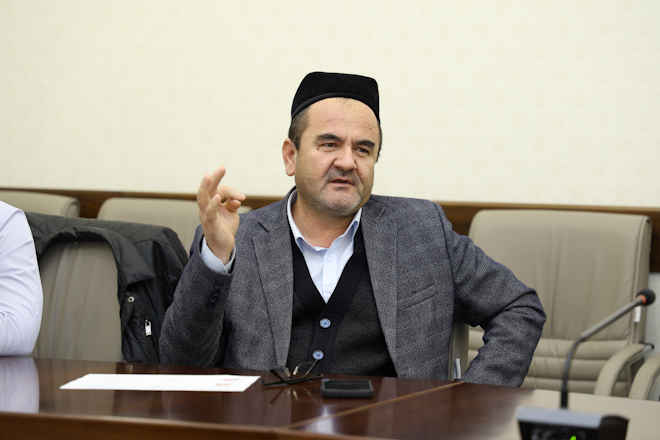
The event continued with lively discussions and a question-and-answer session. The Malaysian researchers expressed their gratitude for the favourable research conditions in Samarkand and at the Center, access to rare scholarly sources, and the warm hospitality extended to them.
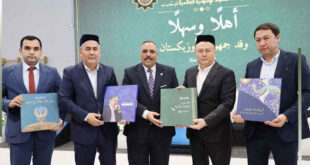
At the conclusion of the event, special certificates were awarded to the international scholars in recognition of the successful completion of their research fellowship.
Imam Bukhari International Scientific Research Center
Press Service