Imom Buxoriy xalqaro ilmiy-tadqiqot markazi bukhari.uz

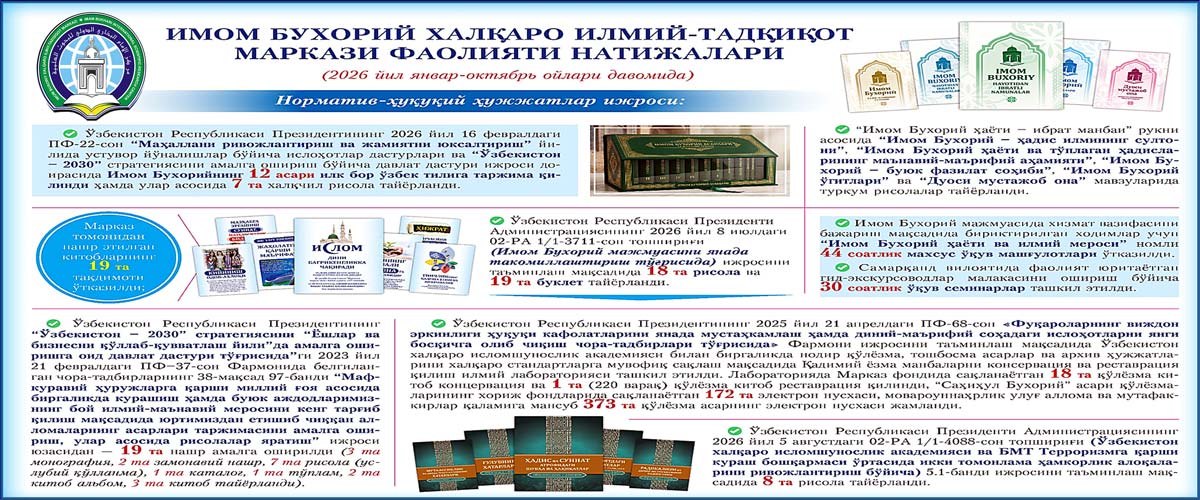


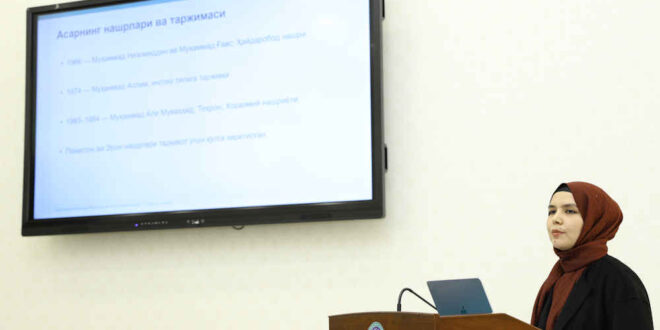
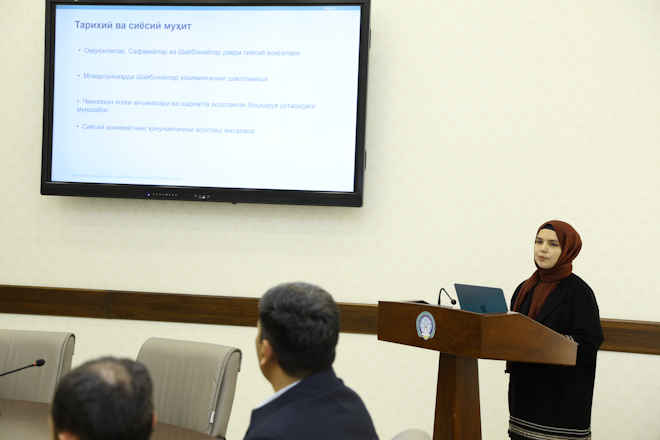
Dr. Madinabonu Moidinova, a researcher at Bursa Uludağ University in Türkiye and recipient of the Imam Bukhari International Scholarship, delivered a presentation at the Imam Bukhari International Scientific Research Center upon completing her research fellowship. Her presentation examined the contribution of the prominent scholar Fadl Allah ibn Ruzbihan Khunji to Islamic political thought and the mirrors-for-princes tradition, with particular emphasis on the political and legal ideas articulated in his work Suluk al-Muluk.
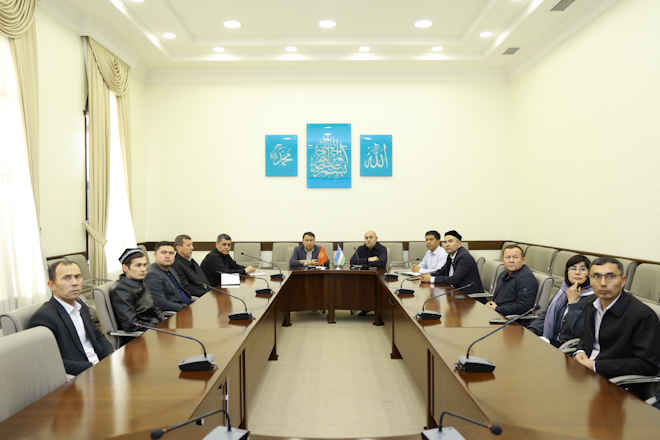
The researcher noted that although the political thought of such distinguished scholars as al-Mawardi, al-Ghazali and Nizam al-Mulk has been extensively studied, Khunji’s place in the mirrors-for-princes tradition and the approaches developed in Suluk al-Muluk have yet to be adequately examined in an integrated scholarly framework.

The historical and political context of the research encompassed developments during the Aq Qoyunlu, Safavid and Shaybanid periods, the establishment of Shaybanid rule in Transoxiana, and the relationship between the traditions of Genghis Khan’s Yasa and Sharia-based governance, alongside questions concerning the justification of political legitimacy. The Yasa, a significant monument of medieval legal history, refers to the body of laws adopted by the Mongol tribes at the 1206 assembly held near the headwaters of the Onon River.
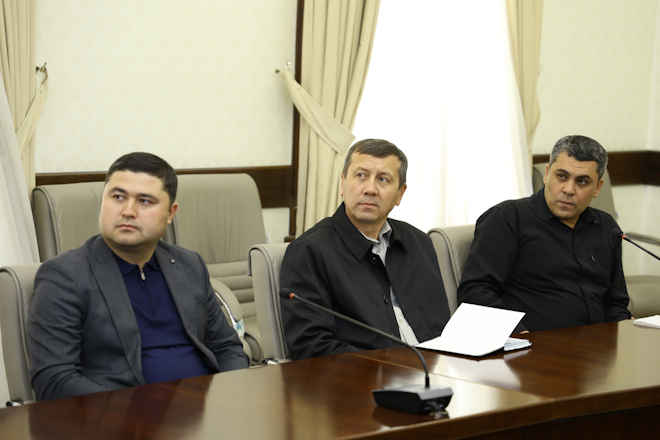
Particular attention was devoted to the history of the composition, structure, and jurisprudential and political characteristics of Suluk al-Muluk. As noted during the presentation, the work was begun in 1513 and completed in May 1514. It comprises an introduction, fifteen chapters, eighty-four sections and a conclusion. Although Khunji adhered to the Shafi‘i school of Islamic jurisprudence, he composed this work for a predominantly Hanafi political environment. Issues of governance, the imamate and political authority are examined from both Hanafi and Shafi‘i perspectives within the framework of furu‘ al-fiqh, the branch of Islamic jurisprudence concerned with practical legal rulings and specific areas of law.
The presentation also featured discussions on the 1966 Hyderabad edition and the 1983–1984 Tehran editions of the work, its 1974 English translation, and the methodological aspects of manuscript research. Particular emphasis was placed on describing the manuscript copies preserved at the Institute of Oriental Studies of the Academy of Sciences of Uzbekistan, comparing them with printed editions, identifying textual variants, and examining political and legal terminology as key areas of the research.
Participants emphasized that these studies are of considerable scholarly significance in elucidating the relationship between Sharia and political authority in early sixteenth-century Transoxiana, examining the concepts of justice, the imamate and political legitimacy from both theoretical and practical perspectives, and establishing a solid academic foundation for further research in source studies and the mirrors-for-princes tradition.
The event continued with a lively question-and-answer session and engaging academic discussions. The visiting researcher from Kyrgyzstan expressed her profound gratitude for the favourable research conditions and opportunities provided during her stay in Samarkand and at the Center, as well as for access to its rich scholarly resources and the warm hospitality extended to her.
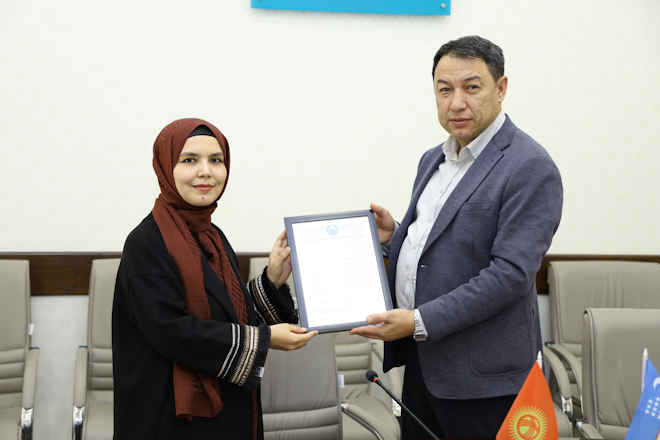
At the conclusion of the event, the international researcher was presented with a certificate in recognition of the successful completion of her research fellowship at the Center.
Press Service