Imom Buxoriy xalqaro ilmiy-tadqiqot markazi bukhari.uz



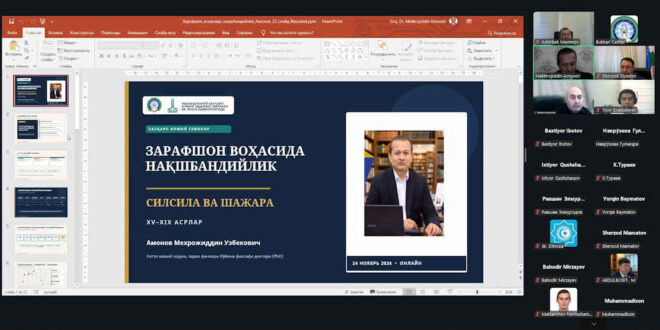
The Imam Bukhari International Scientific Research Center, in cooperation with the Research Centre for Islamic History, Art and Culture (IRCICA) of the Organisation of Islamic Cooperation (OIC), held another international online academic seminar as part of the series entitled “Central Asia – A Centre of Islamic Culture and Art.”
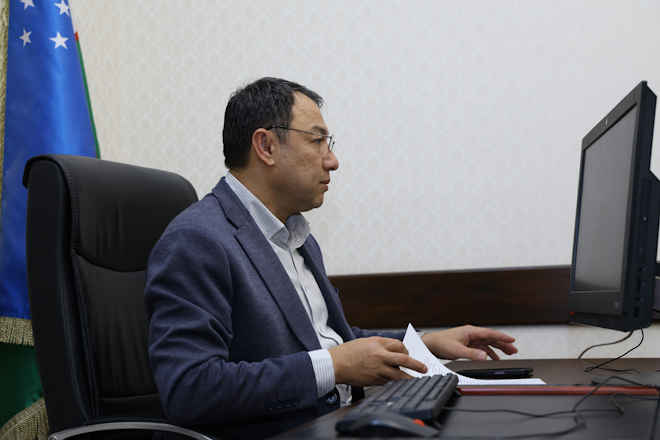
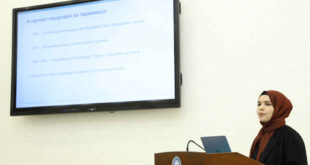
The event brought together representatives of IRCICA, scholars from the Institute of Oriental Studies of the Academy of Sciences of Uzbekistan, the National University of Uzbekistan, Samarkand State University and Bukhara State University, researchers from the Bahauddin Naqshband Scientific Research Center, faculty members and students of the School of Hadith Studies. Participants attended a lecture entitled “The Naqshbandiyya in the Zarafshan Valley: Spiritual Lineages and Genealogies (15th–19th Centuries),” delivered by Dr. Mehrojiddin Amonov, Senior Research Fellow at the Imam Bukhari International Scientific Research Center.
The lecture focused on reconstructing the spiritual lineages of Sufi orders through historical sources, distinguishing chains of spiritual transmission from genealogical descent, and examining the historical significance of spiritual authorization documents (irshadnamas) and endowment deeds (waqfnamas). As explained during the presentation, a silsila represents a chain of spiritual transmission from one Sufi master to another, while a shajara traces ancestral descent and kinship. A single spiritual master may also hold authorization in several Sufi orders. Drawing on manuscripts preserved in collections in Bukhara, Samarkand, Dahbed and Miyankal, as well as an irshadnama dated 1832 and a waqfnama dated 1888, the speaker shed light on the material and spiritual foundations of the region’s centres of learning and spirituality.
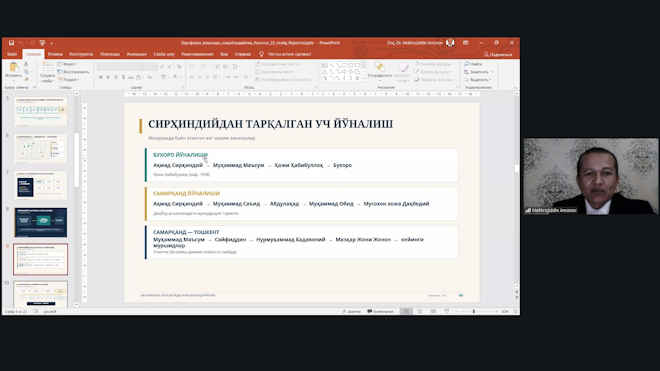
One of the most noteworthy aspects of the seminar was the presentation of new findings concerning the branching and transregional circulation of the Naqshbandiyya tradition. Drawing on documentary evidence, the researcher demonstrated that Mulla Abdurahman Ghijduwani was simultaneously affiliated with the Naqshbandiyya, Qadiriyya and Chishtiyya spiritual lineages. He also traced the transmission of the Naqshbandiyya from Transoxiana to India and its subsequent return to the Zarafshan Valley through the Mujaddidiyya and other branches.
Furthermore, based on the work Mukashif al-Asrar, the researcher revealed that the disciples of Muhammad Husayn Bukhari were distributed across twenty-four locations in present-day Uzbekistan, more than fourteen of which were situated in the Zarafshan Valley. He also presented the genealogy of Muhammad Husayn Bukhari’s descendants, tracing it into the twentieth century.

The discussion explored the role of Sufi lodges (khanaqahs), madrasas and charitable endowments in the region’s social and spiritual life, alongside the Naqshbandiyya’s emphasis on honest labour and social responsibility. As the speaker noted, the principle “Dil ba yoru dast ba kor” – “Keep your hands at work and your heart with Allah” – vividly illustrates how individuals can pursue spiritual perfection while engaging in honest, everyday work.

In his concluding remarks, the researcher highlighted that various branches of the Naqshbandiyya, including the Ahrariyya, Dahbidiyya, Mujaddidiyya and Husayniyya, maintained close ties in the Zarafshan Valley between the fifteenth and nineteenth centuries. He also emphasized that multiple Sufi traditions could converge under the guidance of a single spiritual master, and that spiritual authorization documents, genealogical records and endowment deeds constitute invaluable sources for the comparative study of Sufi history.
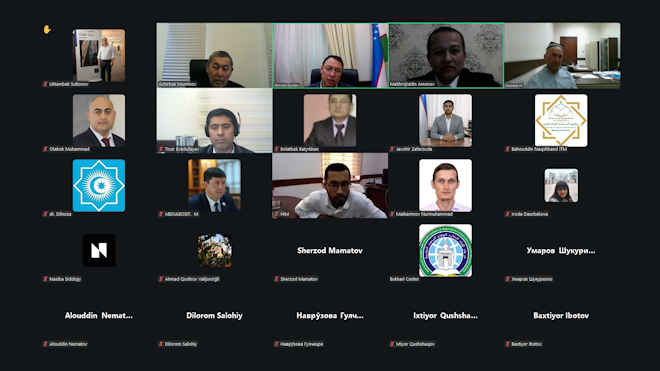
Participants highly commended the source-based historical analysis presented during the lecture, emphasizing that such international academic exchanges play a vital role in deepening scholarly understanding of Uzbekistan’s rich spiritual heritage and making it accessible to a wider international audience.
Press Service