Imom Buxoriy xalqaro ilmiy-tadqiqot markazi bukhari.uz



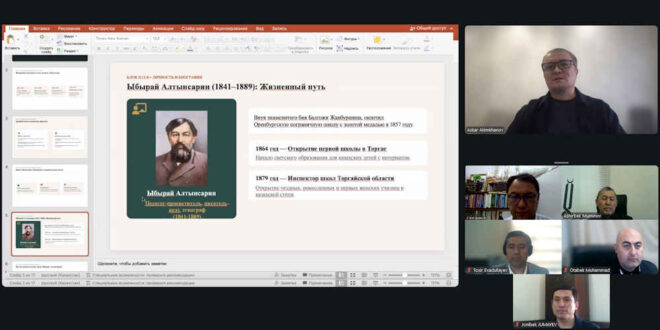
The Imam Bukhari International Scientific Research Center, in cooperation with the Research Centre for Islamic History, Art and Culture (IRCICA), hosted another international online scientific seminar as part of the series titled “Central Asia – The Center of Islamic Culture and Art.”
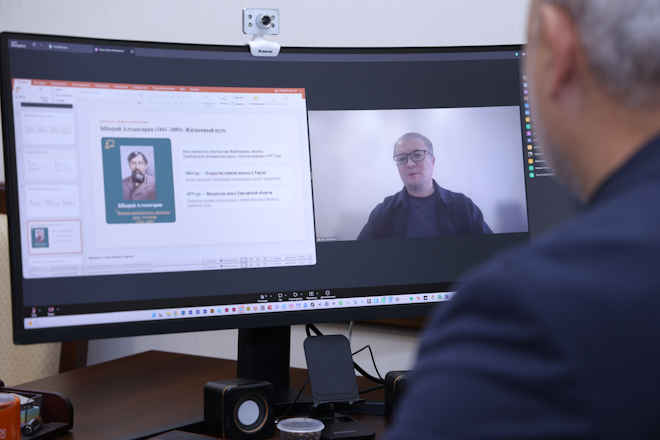
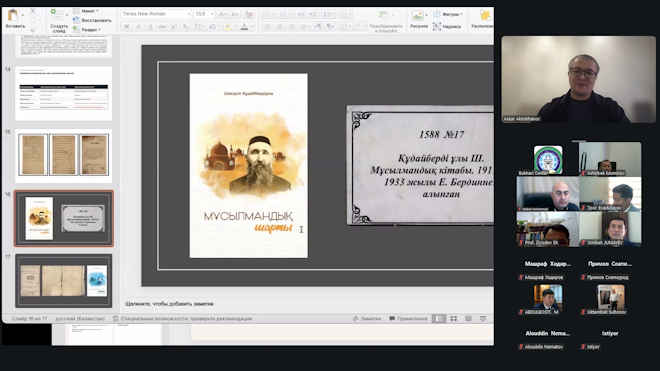
The seminar featured a presentation by Askar Akimkhanov, Associate Professor at the Department of Islamic Studies of the Egyptian University of Islamic Culture Nur-Mubarak in Kazakhstan and Candidate of Historical Sciences. His lecture was entitled “The Significance of Ibray Altynsarin’s Shara’it al-Islam and Shakarim Kudaiberdyuly’s The Muslim Book in the Development of Religious Education in Kazakhstan in the 20th Century.”
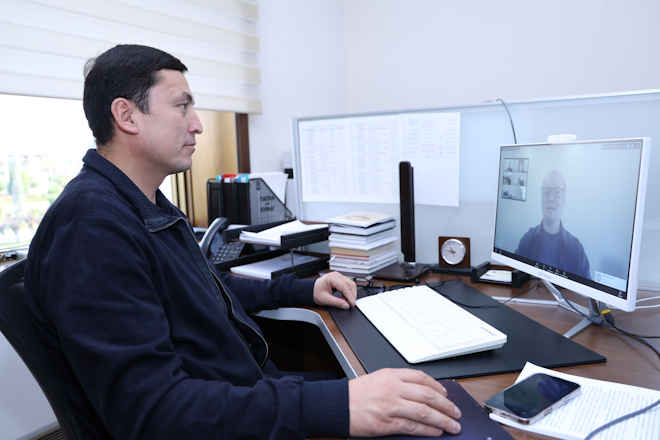
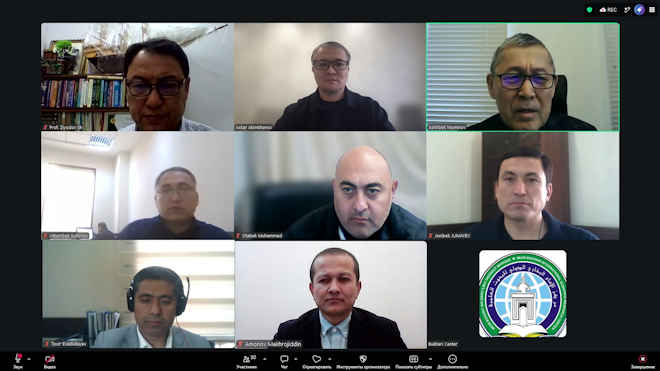
Leading scholars, experts, and researchers from IRCICA, the Institute of Oriental Studies of the Academy of Sciences of Uzbekistan, the International Islamic Studies Academy of Uzbekistan, the National University of Uzbekistan, and the Tashkent Islamic Institute participated in the seminar. Discussions focused on the spiritual and intellectual life of Kazakh society in the late 19th and early 20th centuries, as well as the development of Islamic education and scholarly cooperation across the region.
During his presentation, Askar Akimkhanov provided a comparative theological analysis of two significant works: Ibray Altynsarin’s Shara’it al-Islam, published in 1884 by the Kazan University Printing House, and Shakarim Kudaiberdyuly’s The Muslim Book, published in Orenburg in 1911.
The speaker emphasized that these two seminal treatises played an important role in preserving the national and religious identity of the Kazakh people and conveying authentic Islamic teachings to younger generations in their native language. Amid the challenges of colonial rule and external ideological pressures, these works contributed significantly to improving literacy and promoting religious enlightenment among the population.
The seminar highlighted that both authors sought to explain the fundamental principles of Islamic belief, matters of faith, and essential Islamic legal rulings governing everyday life in clear and accessible language. Participants also underscored the importance of studying such historical and educational sources to promote sound religious knowledge, preserve traditional values, and protect young people from alien ideologies and radicalization.
At the conclusion of the seminar, participants highly appreciated the scholarly insights presented and emphasized that such international academic exchanges contribute to the mutual enrichment of the spiritual and intellectual heritage of brotherly nations while further strengthening scientific cooperation.
Press Service