Imom Buxoriy xalqaro ilmiy-tadqiqot markazi bukhari.uz


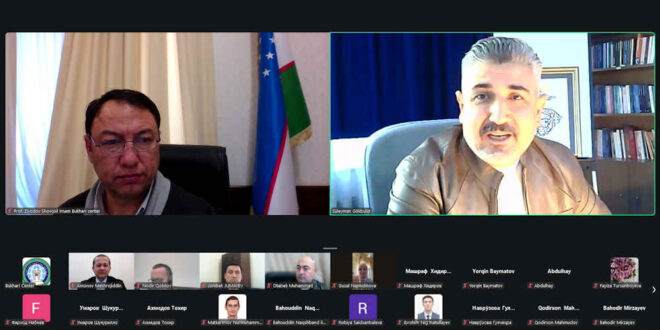
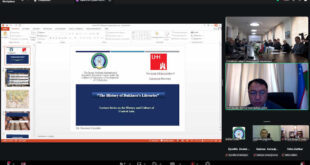
The Imam Bukhari International Scientific Research Center, in cooperation with the Bahauddin Naqshband Research Center and Marmara University in Türkiye, organized another online academic seminar as part of the ongoing series entitled “Sufism: Past, Present and Future.”
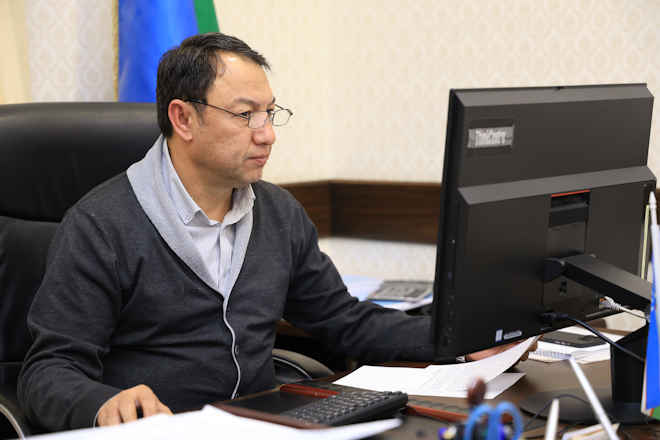
The event brought together nearly 40 researchers and participants representing the two research centers and several prominent academic institutions, including the Institute of Oriental Studies, the Institute of Language and Literature, and the Karakalpakstan Research Institute for the Humanities under the Academy of Sciences of Uzbekistan, Bukhara State Technical University, Samarkand State University, Urgench State University, Mir Arab Higher Madrasah, and the Higer School for Hadith Sciences.
The seminar featured a lecture by Prof. Dr. Süleyman Gökbulut of Dokuz Eylül University in Izmir, Türkiye, entitled “The Kubrawiyya Sheikh Sayf al-Din Bakharzi and His Activities in Bukhara.”
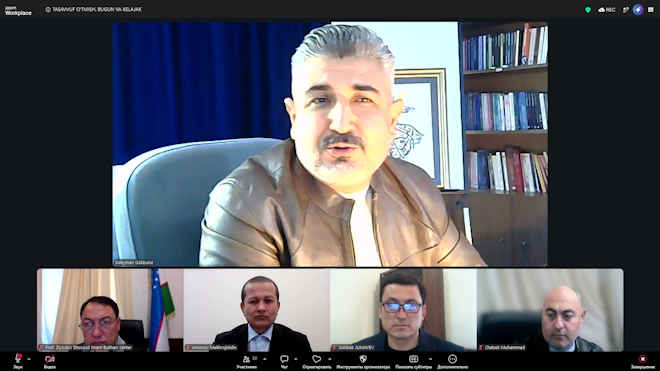
Sayf al-Din Bakharzi (1190–1260), a prominent 13th-century representative of the Kubrawiyya Sufi order who lived and worked in Central Asia, remains a figure of considerable scholarly interest due to his eventful life and diverse intellectual legacy. In his presentation, the Turkish scholar provided a detailed account of the renowned sheikh’s activities in Bukhara, the role of the madrasa he established in the region’s intellectual and educational life, and his relations with Mongol rulers, particularly Berke Khan.
As is widely known, Berke Khan, a grandson of Genghis Khan and the third son of Jochi Khan, ruled the Golden Horde (the Ulus of Jochi), the western domain of the Mongol Empire, from 1257 to 1266. He is remembered as the first ruler of the Genghisid dynasty to embrace Islam and for his role in establishing it as the state religion. Sheikh Bakharzi’s influence is regarded as a decisive factor in Berke Khan’s conversion to Islam, an event that profoundly altered the course of history in both the Islamic world and the Mongol Empire.

The lecture also explored Bakharzi’s rich scholarly legacy, including his works on hadith and Sufism. Drawing on historical sources, the speaker shed light on the sheikh’s connections, through his descendants, with Anatolian Sufis, particularly the renowned Mawlana Jalal al-Din Rumi in Konya.
The seminar also provided a platform for lively discussions on contemporary challenges in transmitting religious and spiritual knowledge to younger generations. Particular attention was given to the influence of modern technologies, issues of trust, and the impact of political developments on spiritual practices. Participants emphasized that the fundamental essence of Islam and Sufism lies in guiding individuals toward spiritual and moral excellence while promoting peace, harmony, and mutual understanding in society.
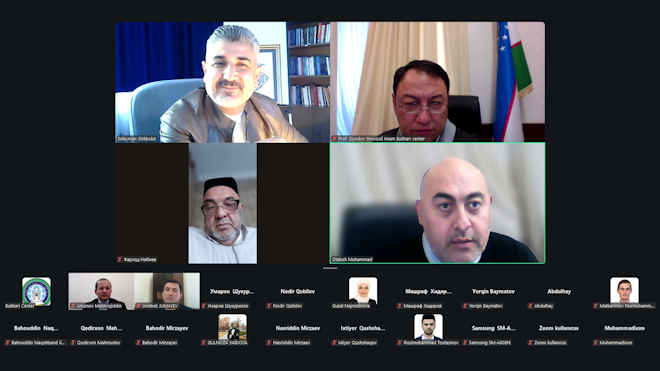
The international online seminar, marked by engaging discussions and an interactive question-and-answer session, left a lasting impression on participants. It was also reaffirmed that such scholarly initiatives would be continued on a regular basis, further strengthening international academic dialogue and cooperation in the study of Sufism.
Press Service