Imom Buxoriy xalqaro ilmiy-tadqiqot markazi bukhari.uz


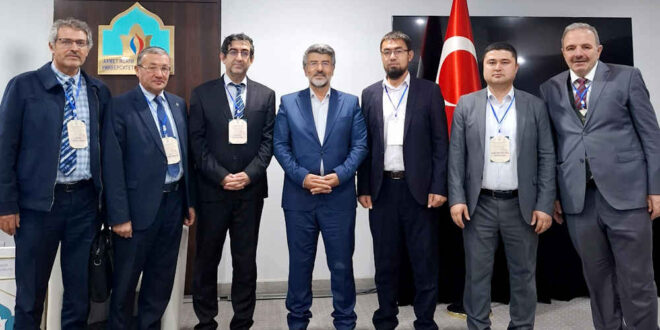
The Third International Symposium entitled “Turkic-Islamic Thought from Transoxiana to Anatolia: Turkestan at the Crossroads of Knowledge and Wisdom” was held at Khoja Akhmet Yassawi International Kazakh-Turkish University in Turkestan, Kazakhstan.
Jointly organized by Ankara Yıldırım Beyazıt University, Khoja Akhmet Yassawi International Kazakh-Turkish University, and the Society for the History of Hadith, the symposium aimed to strengthen scholarly and spiritual ties across Central Asia, promote in-depth research into the intellectual legacy of the region’s great scholars, and raise awareness of their contributions to the development of Islamic civilization.
Representatives of the Imam Bukhari International Scientific Research Center actively participated in the symposium, presenting their research on the intellectual heritage of prominent scholars and the history of hadith studies, Islamic jurisprudence, and Sufism.
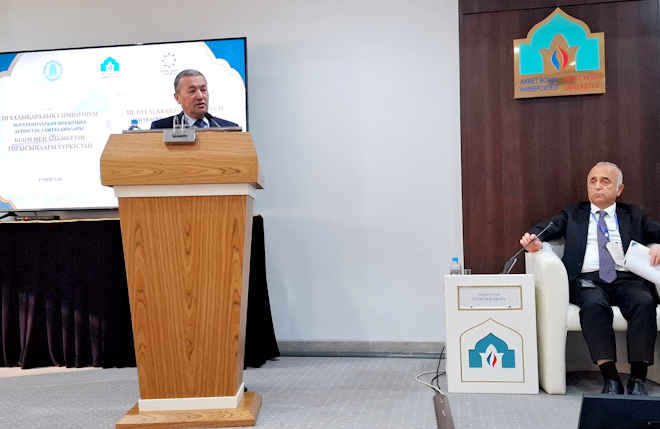
Shukurillo Umarov, who attended the symposium in person, delivered a presentation entitled “The Contributions of Prominent Companions of the Prophet to the Spread of Islam in Central Asia.” His presentation highlighted the role of Companions such as Qutham ibn Abbas in the dissemination of Islamic teachings throughout Transoxiana and examined a three-stage historical framework for understanding this process.
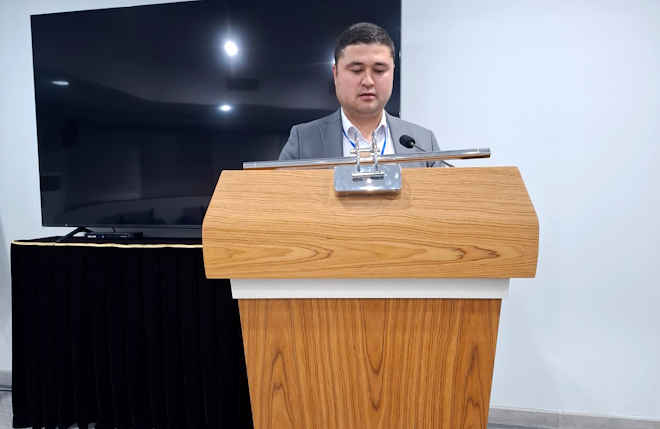
Ravshan Elmurodov presented a paper entitled “An Analysis of Abu al-Barakat al-Nasafi’s Al-I‘timad fi al-I‘tiqad,” focusing on the scholar’s intellectual legacy, the content and central themes of the work, and its significance for understanding the development of Islamic theology (kalam) in Transoxiana.
Several other researchers from the Center participated in the symposium online.
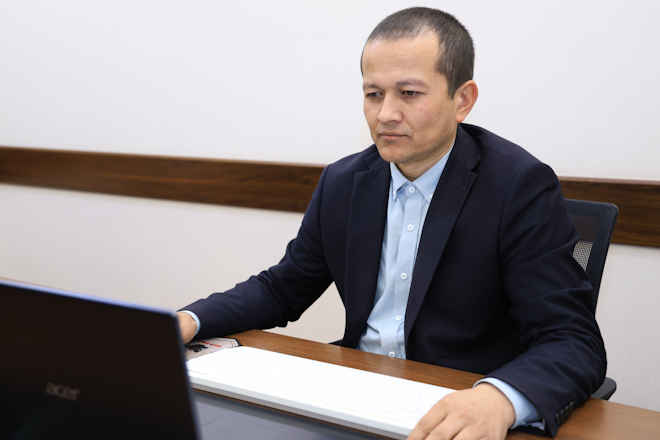
Among them, Mehrojiddin Amonov delivered a presentation entitled “An Analysis of Irshadnamas in the History of Sufism in the Zarafshan Valley.” He examined the historical and source-critical significance of irshadnamas – instructional and advisory texts through which Sufi masters (murshids) guided their disciples (murids) in spiritual discipline, purification of the self, and the pursuit of spiritual perfection. His research also explored how the study of ijazatnamas – certificates of authorization granted by Sufi masters to their disciples, permitting them to transmit, teach, and perpetuate spiritual teachings – can contribute to a deeper understanding of the region’s intellectual and spiritual traditions.
Usmonkhon Mukhammadiyev presented a paper entitled “The Samarkand School of Hanafi Jurisprudence: Its Formation and Distinctive Features.” His presentation examined the emergence and historical development of the Hanafi school of jurisprudence in Samarkand, highlighting its distinctive scholarly characteristics. The research contributes to a deeper understanding of the role played by the jurisprudential traditions of Transoxiana in the broader history of Islamic legal scholarship.
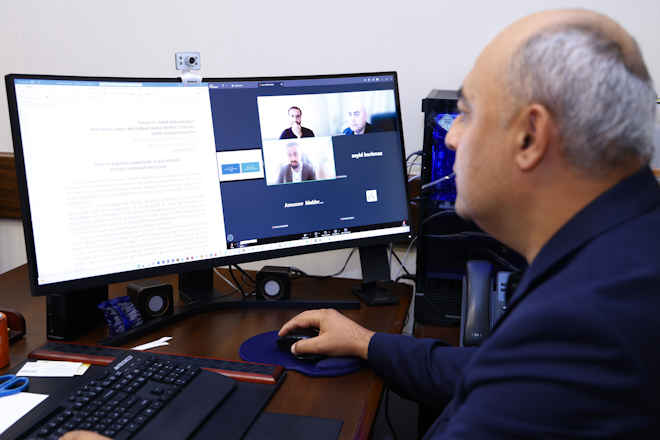
Otabek Mukhammadiyev delivered a presentation entitled “Hadith Transmitters from Transoxiana Mentioned in Imam al-Bukhari’s Al-Tarikh al-Kabir.” He highlighted the great hadith scholar’s contributions to the development of hadith studies and discussed ongoing efforts to examine transmitters originating from Transoxiana through a comparative analysis of additional historical sources.
Collectively, the presentations by the Center’s researchers addressed key aspects of the region’s rich scholarly heritage in hadith studies, Islamic jurisprudence, and Sufism. They emphasized the importance of critically examining historical sources and further illuminating the contributions of Transoxiana’s scholars to the development of Islamic civilization.
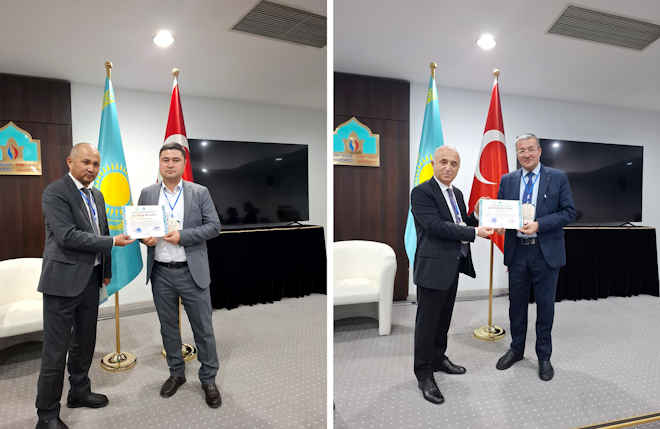
The international symposium provided a valuable platform for the Center’s researchers to present their findings to the international academic community, exchange scholarly perspectives, and establish new opportunities for cooperation. Their participation also contributed to strengthening international academic ties and advancing collaborative research into the rich intellectual and spiritual heritage of Central Asia.
Press Service