Imom Buxoriy xalqaro ilmiy-tadqiqot markazi bukhari.uz




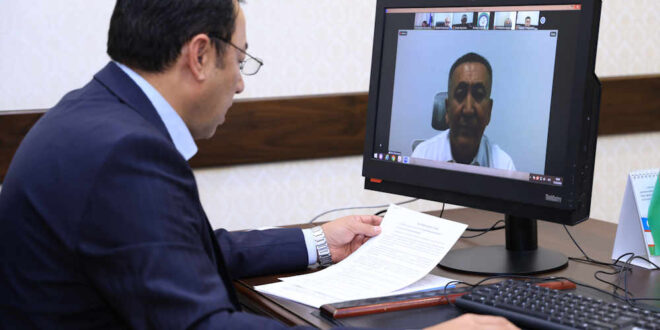
The Imam Bukhari International Scientific Research Center continues its international online seminar series entitled “Islam: A Religion of Peace and Enlightenment,” organized under the guiding principle “Enlightenment Against Ignorance.”
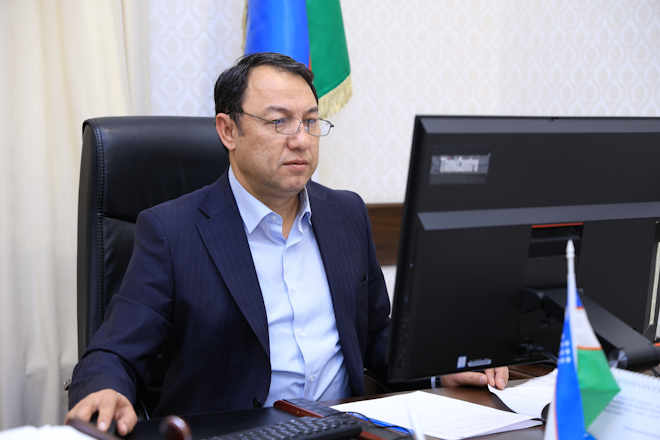
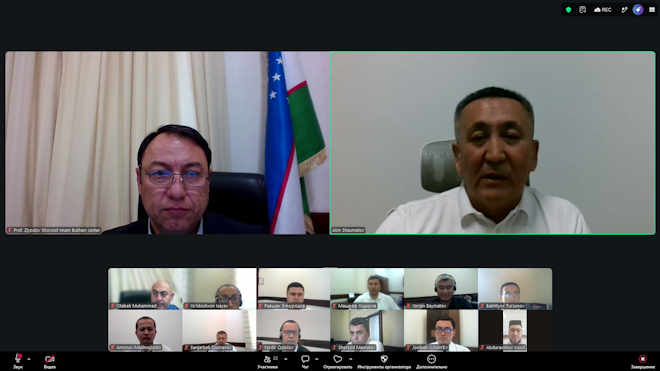
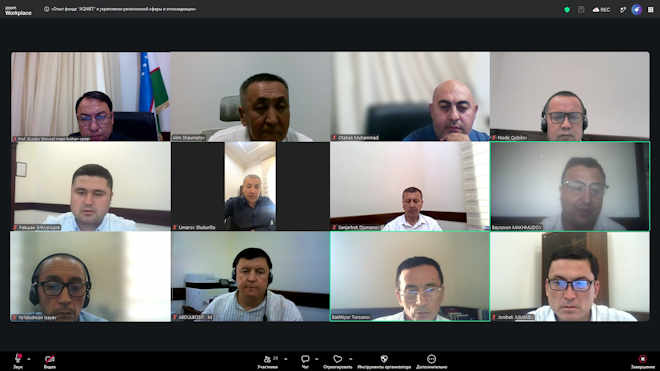
As part of this initiative, another international online seminar was held with the participation of representatives from the Center, the Committee on Religious Affairs, the International Islamic Academy of Uzbekistan, the Institute for Geopolitical Studies of Kazakhstan, the AQNIET Center for Information Outreach and Rehabilitation Public Foundation, and the Research Centre for Islamic History, Art and Culture (IRCICA).
During the seminar, Alim Shaumetov, Adviser on International Projects to the Director of the Kazakhstan-based foundation, delivered a presentation entitled “The AQNIET Foundation’s Experience in Strengthening the Religious Sphere and Promoting Ethnomediation.”
The expert outlined the foundation’s extensive practical experience and achievements in deradicalization, resocialization and ethnomediation. Addressing its institutional development, he noted that AQNIET began its work in 2014 with only three theologians and has since grown into a major organization bringing together 107 qualified specialists and operating through 20 regional offices across Kazakhstan.
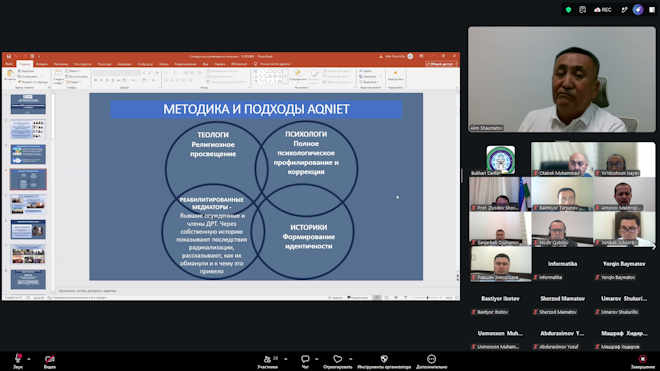
It was emphasized that the rehabilitation process involves not only theologians, psychologists and historians, but also mediators who were formerly incarcerated and have themselves undergone rehabilitation. Their personal experience plays a particularly important role in working with participants.
The foundation’s principal target groups include individuals convicted of extremist offences, 760 citizens repatriated from the Middle East under Operation Jusan – a name referring to wormwood as a symbol of one’s native soil and the call to return home – and leaders of destructive groups.
According to the speaker, deradicalization is conducted in stages. The process begins with an analysis of the factors that led to radicalization and the development of an individual action plan. This is followed by corrective intervention and regular assessment of its effectiveness. Positive changes in worldview and the development of traditional religious values were identified as key indicators of successful rehabilitation.
The seminar highlighted that regular preventive work is being conducted with more than 400 inmates in correctional institutions. It was also noted that three additional rehabilitation centers for individuals holding radical views were established in 2026.
As a result of these comprehensive measures, the reoffending rate has remained below two percent. The foundation’s methodology was reported to be fully aligned with the Rome Memorandum – one of the leading international guidance documents on the rehabilitation and reintegration of persons convicted of violent extremism and terrorism-related offences – as well as the recommendations of the Global Counterterrorism Forum (GCTF).

Particular attention was also drawn to the regular monitoring of more than 900 international sources that seek to influence Central Asian audiences through various information channels.
Concluding his presentation, the expert stressed that efforts to counter destructive ideologies should not be limited to legal measures alone. Instead, they require a comprehensive approach combining psychological and theological support with digital information analysis.
Press Service