Imom Buxoriy xalqaro ilmiy-tadqiqot markazi bukhari.uz




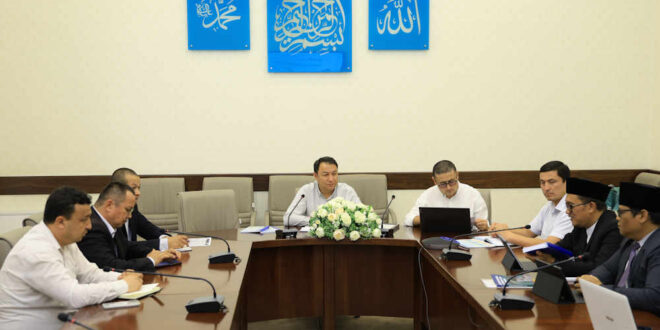
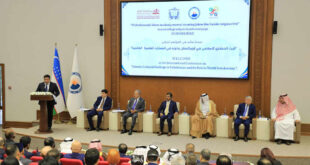
The recipients of the International Imam Bukhari Scholarship Program – Ahmad Hawasyi and Samsul Ariyadi, researchers from the IIQ Jakarta in Indonesia – held a presentation at the Imam Bukhari International Scientific Research Center on the outcomes of their research conducted at the Center.
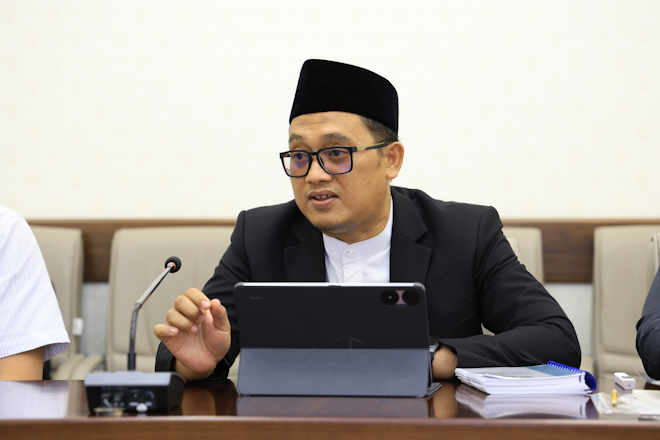
The event began with a presentation by Ahmad Hawasyi on his research entitled “The Influence of Sahih al-Bukhari on the Development of Tafsir Literature in Indonesia in the 20th Century.”
The researcher analyzed the methodological differences between classical and modern schools of Qur’anic exegesis and provided an in-depth examination of the role of Imam al-Bukhari’s hadiths in interpreting Qur’anic verses. The study compared the traditional approach of Abu Mu’in al-Nasafi, based on kalam, principles of Islamic jurisprudence, and precise textual rules, with the modern methodology of the Indonesian scholar Hamka, which focuses on deriving social and spiritual lessons from the legal and ethical implications of hadiths. The interpretations of hadiths relating to language and theology, the social status of women, and phenomena of existence in the two tafsir works were illustrated through specific examples.
It was emphasized that the hadiths of Imam al-Bukhari have served throughout the ages as one of the most important and multifaceted sources for social and intellectual reform.
This was followed by a presentation by Samsul Ariyadi on his research entitled “An Analysis of the Genealogy of Sahih al-Bukhari in the Context of Javanese Culture.”
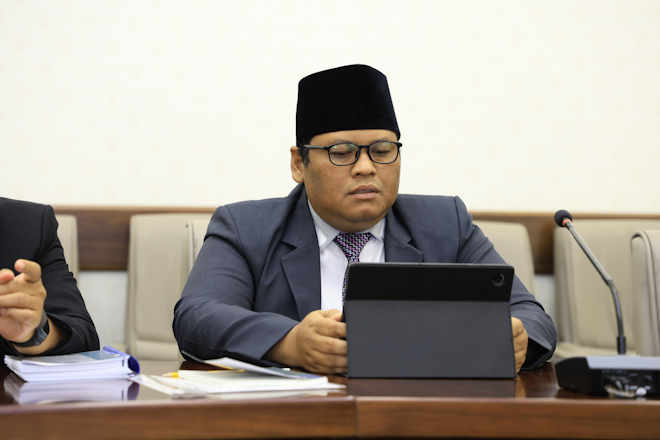
The researcher outlined the historical stages through which the science of hadith originating in Bukhara, together with Sahih al-Bukhari, spread to Southeast Asia via the Haramayn (the two holy mosques), particularly to the Indonesian island of Java. The presentation provided a detailed examination of the textual and source-based foundations of the “Magna Gandul” tradition – a method of teaching Arabic texts through interlinear, word-for-word translations into Javanese using the Pegon script, accompanied by grammatical annotations.
The study demonstrated that this tradition represents not merely a form of translation, but a unique pedagogical means of adapting Islamic knowledge to the local cultural context. It also provided a scholarly basis for understanding the historical roots of the spiritual and academic ties between Central Asia and Indonesia.
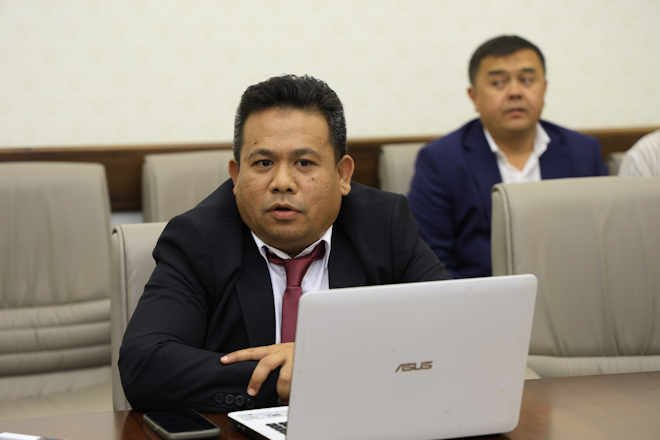
Following this, Lalu Muhamad Fazlurrahman, a researcher from Mataram State Islamic University in Indonesia who began his research internship at the Center, presented an international research project entitled “Traditions Associated with the Stages of Life: A Study of the ‘Living Hadith’ in the Examples of Lombok Island and Uzbekistan.”
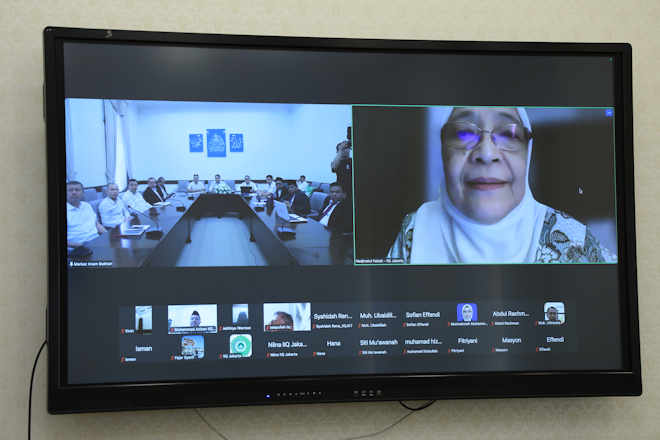
The presentation introduced an ethnographic methodology for studying hadith not merely as a theoretical source, but also in its practical manifestations throughout the course of human life – from birth to death – as reflected in everyday customs and rituals. The researcher outlined the scholarly novelty of the project, including a comparative analysis of similarities and differences in the use of hadith within family and social traditions in the societies of Lombok Island and Uzbekistan, as well as the processes through which hadith-based values have been revived in the post-Soviet space.
The event continued with an engaging question-and-answer session and academic discussions. The Indonesian scholars expressed their deep gratitude for the favorable conditions and extensive opportunities provided during their research in Samarkand and at the Center, as well as for the rich sources made available to them and the warm hospitality they received.
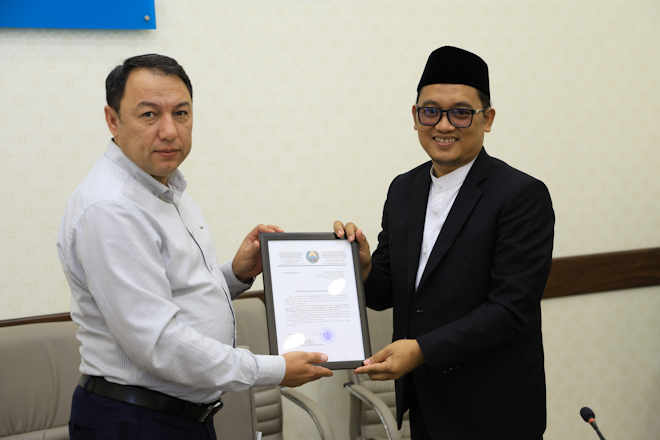
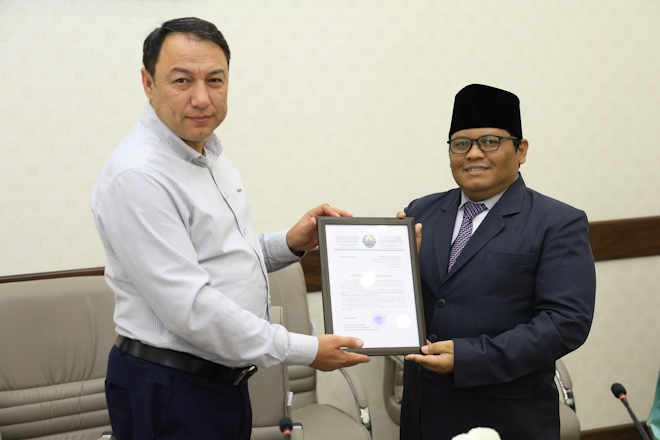
Special certificates were presented to foreign scholars who successfully completed their research internships at the Center.
Press Service