Imom Buxoriy xalqaro ilmiy-tadqiqot markazi bukhari.uz


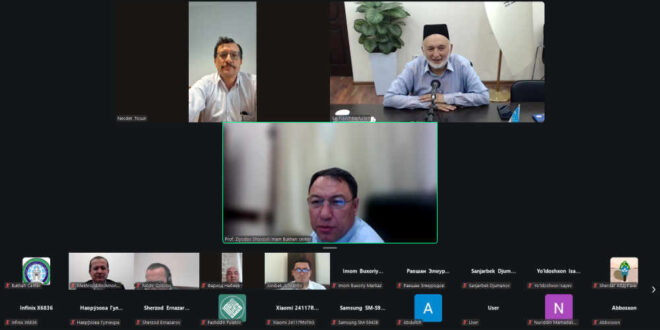
A seminar dedicated to important issues related to religious and educational heritage, Hadith studies, and Sufi teachings was held at the Imam Bukhari International Scientific Research Center with the participation of scholars and researchers from the Academy of Sciences of Uzbekistan, the Bahauddin Naqshband Research Center, Bukhara State University, and Marmara University.

At the seminar, Sayfiddin Sayfulloh, Head of the Department of History of Classical Literature at the Institute of Uzbek Language, Literature and Folklore of the Academy of Sciences of Uzbekistan, delivered a presentation titled “Naqshbandiyya and Hadith.”
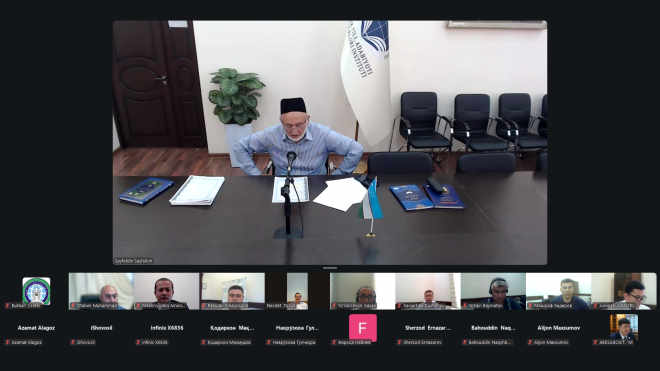
The scholar spoke about the history of Islam, schools of Islamic thought, ethics, Hadith commentaries, and issues related to Sufism. Particular attention was devoted to the spiritual and ethical dimensions of Sufism and the Naqshbandi tradition, the role of religious knowledge in human life, and the importance of studying the legacy of Islamic scholars. Drawing on practical examples, he explained that Sufi teachings are intrinsically connected with Hadith studies, with every practice grounded directly in the Qur’anic verses and Hadith, emphasizing that the foundation of Sufism is piety and its pillar is morality.

During the discussion, participants exchanged views on the scholarly significance of sources and manuscripts related to Hadith studies. Works such as Alisher Navoi’s “Arba’in” and Muhammad Parsa’s “Fusul al-Sitta”, as well as other literature on Hadith and Islamic sciences, were discussed. It was emphasized that studying these works contributes to a deeper understanding of the methodology of Hadith studies.
Information was also exchanged about manuscripts preserved at the Süleymaniye Library in Istanbul, including Ahmad Ya’qubi’s work “Misbah Muqtabas min al-Masabih”.
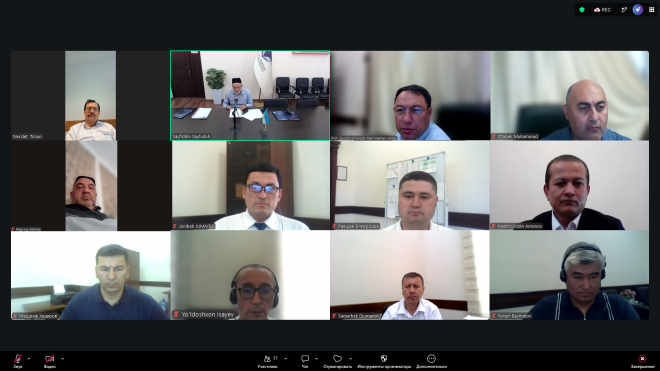
Participants put forward proposals concerning the scholarly study of these sources and their effective use in research.
Particular emphasis was placed on the harmony between knowledge and morality in religious education, spiritual upbringing, and human development. The participants stressed the importance of studying the works and intellectual legacy of scholars who played a significant role in the history of Islamic scholarship and of passing this heritage on to young researchers.

The dialogue was significant in terms of studying the scholarly heritage of Hadith studies, Sufism, and Islamic history, conducting research into primary sources, and promoting religious and educational knowledge more broadly.
Imam Bukhari International Scientific Research Center
Press Service