Imom Buxoriy xalqaro ilmiy-tadqiqot markazi bukhari.uz




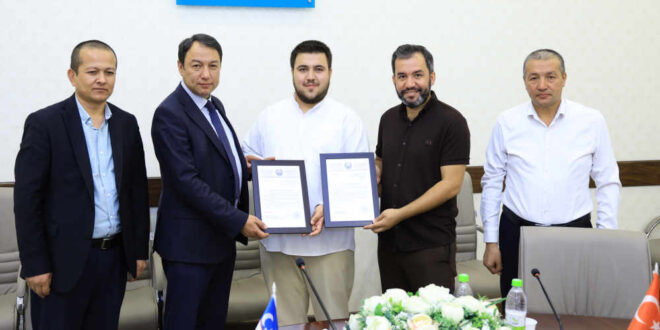
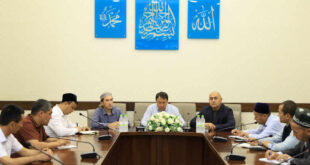
Researchers from Turkey’s Dicle University, Usama Bozkurt and Mustafa Alagözoğlu, recipients of the Imam Bukhari International Scholarship Programme, presented the findings of their research conducted during their academic fellowship at the Imam Bukhari International Scientific Research Center.
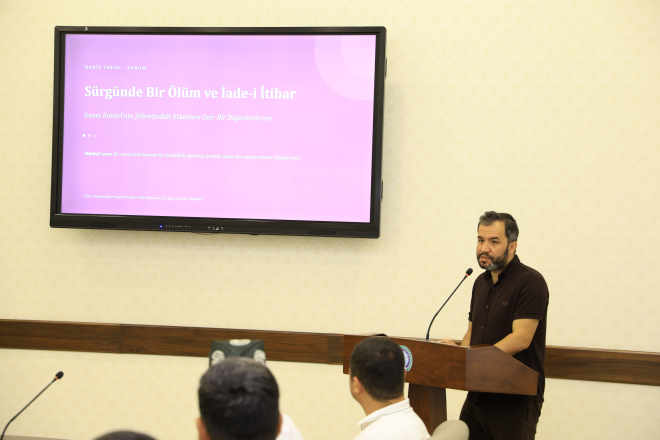
The presentation began with Usama Bozkurt, who presented the results of his research entitled “The Final Period and Death of Imam al-Bukhari: A Sociological Analysis Based on Historical Sources.”
The researcher proposed a novel interdisciplinary approach to the legacy of Imam al-Bukhari at the intersection of the history of hadith scholarship and the sociology of death. Raising the academic question of whether “the scholarly value of a work can fully determine the scholar’s position within the social and cultural environment,” he demonstrated that Imam al-Bukhari’s reputation and standing in society were shaped not only by textual methodology, but also by a complex interplay of historical, sociological and cultural factors.
In this context, the unpleasant circumstances Imam al-Bukhari encountered in Nishapur, his relations with the Emir of Bukhara, and his eventual departure for Khartang were examined through the concept of an “external mechanism of exclusion,” or, more specifically, exile.
The study draws upon Robert Hertz’s concept of “the two-stage process of death.” According to this concept, death does not conclude with the biological termination of life, but also encompasses a subsequent stage in which society reconstructs and reaffirms the deceased person’s memory and social status.
From this perspective, accounts and narratives concerning events that reportedly took place around Imam al-Bukhari’s grave after his death were interpreted as manifestations of the restoration of social recognition – that is, society’s symbolic restoration of the spiritual prestige of a scholar who had experienced injustice during his lifetime.
In conclusion, the researcher emphasized that although some of the narratives associated with Imam al-Bukhari’s death and burial remain questionable from the perspective of isnad (chain of transmission), they nevertheless deserve renewed scholarly attention as important sources reflecting the perceptions and attitudes of the academic and social environment of the period.
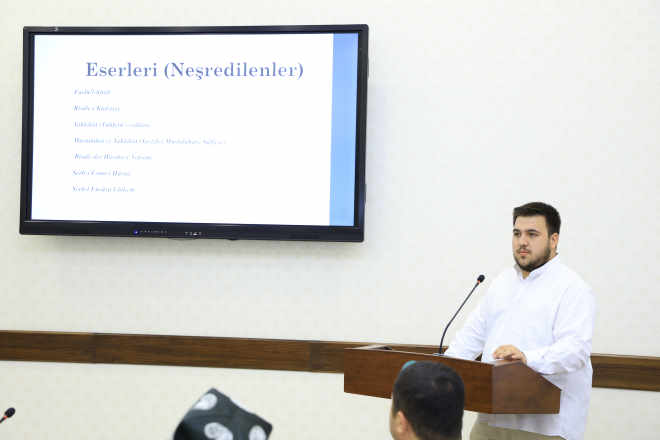
Following this, Mustafa Alagözoğlu presented the findings of his research on “Fusul al-Sitta” (The Six Chapters) by Khwaja Muhammad Parsa, focusing on the work’s manuscript copies, structure, content and surviving copies preserved in Uzbekistan. Particular attention was given to the significance of the work from the perspectives of source studies and textual criticism.
As was noted during the presentation, the six-part work is devoted to the methodology of deriving fiqh rulings from hadith, presenting, on the basis of primary sources, the methodological approaches of scholars who developed Islamic jurisprudence upon the foundations of hadith scholarship.
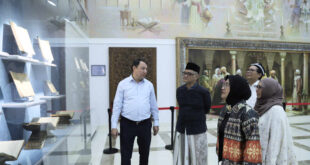
During his research, the scholar examined manuscript copies preserved in several prominent libraries and collections in Turkey, including the Sultan Ahmed, Süleymaniye, Murad Molla, Carullah Efendi, Hacı Selim Ağa and Bayezid collections, as well as the Topkapı Palace. Alongside these sources, particular attention was devoted to the rare manuscript copy preserved in Uzbekistan at the Abu Rayhan Beruni Institute of Oriental Studies, catalogued under No. 2082, which was subjected to detailed examination and comparative analysis.
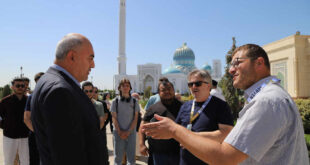
The researcher also highlighted his active participation, during the fellowship period, in international conferences and academic meetings held in collaboration with a number of prominent scientific and educational institutions across Uzbekistan.
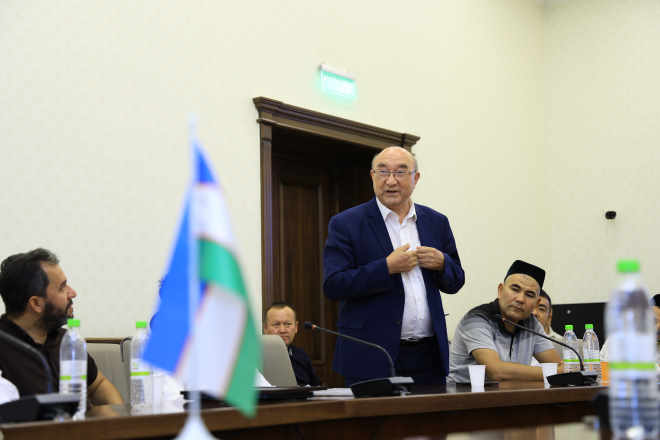
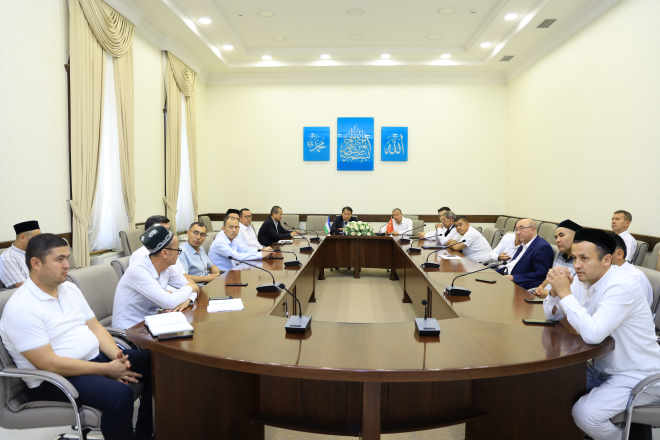
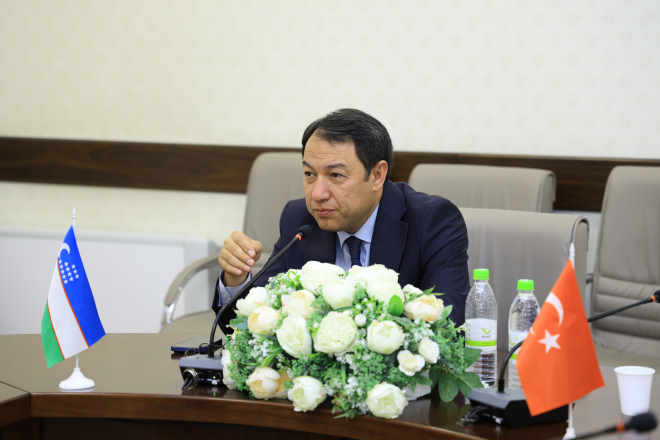
The event continued with a lively exchange of questions, comments and scholarly discussion.
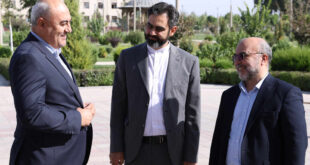
The Turkish researchers expressed their sincere gratitude for the warm hospitality they received in Samarkand, the high-level academic environment established at the Center, and the opportunities for scholarly cooperation and research.
At the conclusion of the presentation, the participants of the international programme were presented with special certificates from the Imam Bukhari International Scientific Research Center, in recognition of their successful completion of the research fellowship.
Imam Bukhari International Scientific Research Center
Press Service