Imom Buxoriy xalqaro ilmiy-tadqiqot markazi bukhari.uz




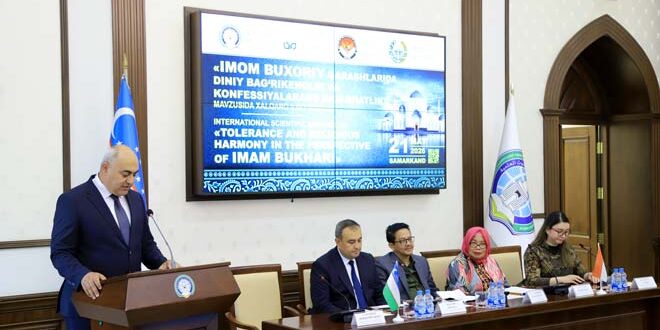
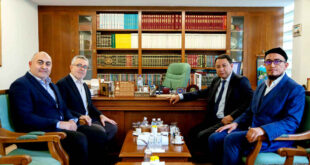
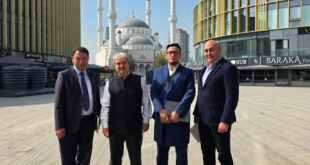
On 21 May, a delegation from Sunan Kalijaga State Islamic University visited the Imam Bukhari International Scientific Research Center.
Sunan Kalijaga, who lived on the island of Java during the fifteenth and sixteenth centuries, is regarded as one of the revered “Nine Saints” (Wali Songo) and is highly esteemed by the Indonesian people. He played a pivotal role in the spread of Islam among local communities, while simultaneously promoting indigenous traditions and values alongside religious education. He also made significant contributions to the development of culture and the arts. The mission and objectives of the university that bears his name have been shaped by this rich intellectual and cultural legacy.
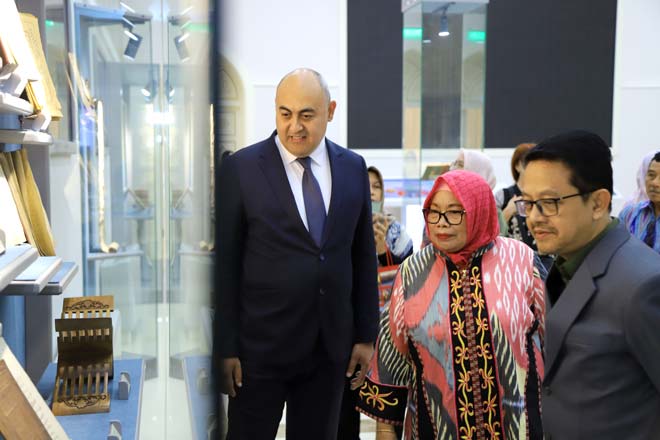
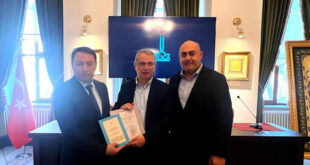
The guests were given a guided tour of the museum exhibition and became closely acquainted with its collections. Members of the delegation were provided with detailed information on the research activities carried out at the Imam Bukhari International Scientific Research Center, its recent publications, and ongoing projects aimed at promoting the rich spiritual and scholarly legacy of the great hadith scholar, Imam al-Bukhari, at the international level.
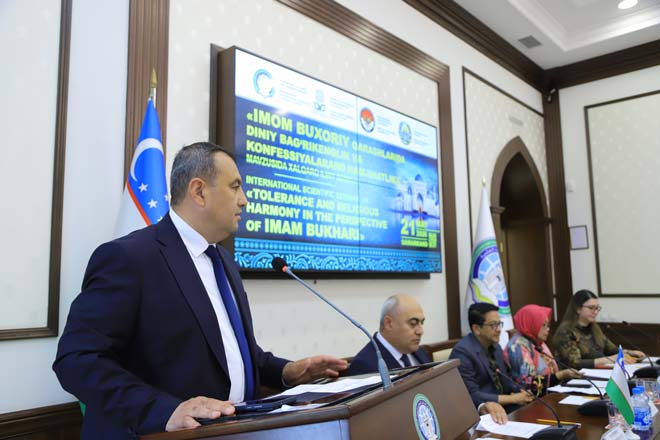
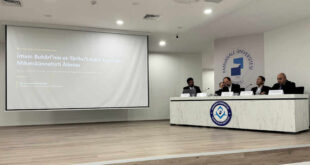
During the visit, an international scientific seminar entitled “Religious Tolerance and Interfaith Harmony in the Thought of Imam al-Bukhari” was held. The event was jointly organized by the Imam Bukhari International Scientific Research Center, the Samarkand Regional Administration, Sunan Kalijaga State Islamic University, and the Embassy of Indonesia in Uzbekistan.
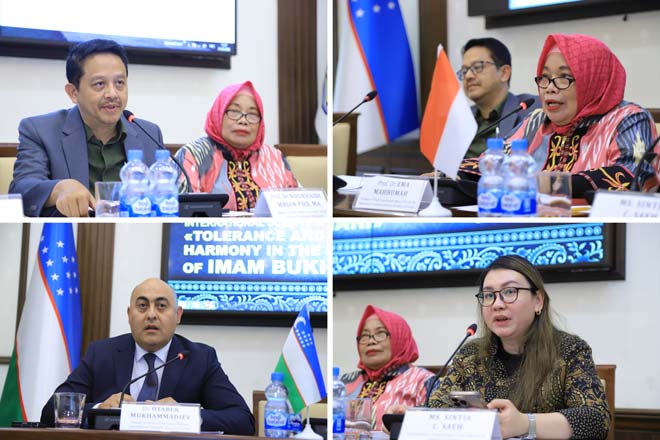
At the opening session, Otabek Muhammadiyev, Rustam Qobilov, and Sintia Sayeh highlighted the importance of international cooperation and the principles of religious tolerance in today’s globalized world.
As part of the seminar, presentations were delivered by Nurhayadi Hasan, Professor and Rector of Sunan Kalijaga State Islamic University, and Ema Marhumah. Their papers were subsequently discussed in depth by the participants.
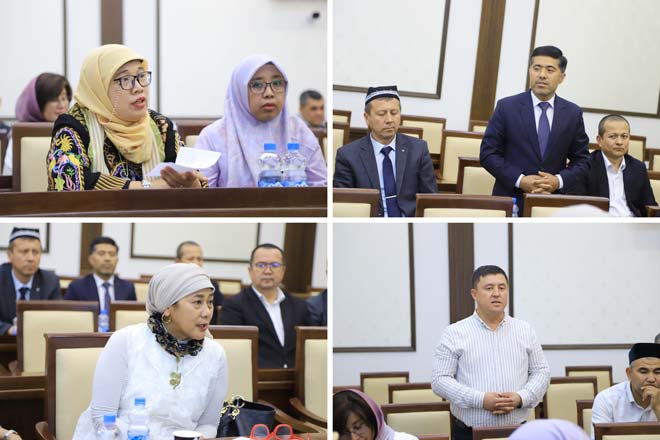
The speakers emphasized that Imam al-Bukhari’s renowned work, Sahih al-Bukhari, addresses not only matters of worship but also highlights harmonious coexistence among people and respect for individuals of different faiths and cultures as authentic Islamic values. Indonesian scholars noted that Imam al-Bukhari’s legacy should not be viewed merely as a historical text; rather, it serves as a practical source of social ethics that can contribute to addressing contemporary challenges such as extremism, hatred, and intolerance. In particular, they demonstrated from an academic perspective that the hadiths of Imam al-Bukhari continue to serve as a guiding framework in Indonesian society for strengthening interfaith tolerance, promoting social responsibility, and fostering patriotism within a multicultural environment.
The speakers also examined, on the basis of hadiths in Sahih al-Bukhari relating to knowledge, science, and social life, the opportunities for promoting women’s education and enhancing their active participation in public and community affairs within the Muslim world. They emphasized that the teachings of Imam al-Bukhari provide an important intellectual foundation for encouraging educational development and constructive social engagement.
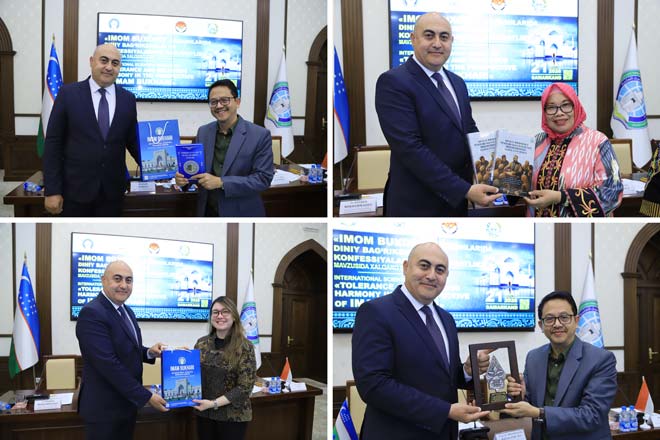
Furthermore, the scholars noted that Imam al-Bukhari’s intellectual legacy has, for centuries, served as a cultural and educational bridge between the peoples of Central Asia and Southeast Asia, fostering mutual understanding and strengthening scholarly and spiritual ties across the two regions.
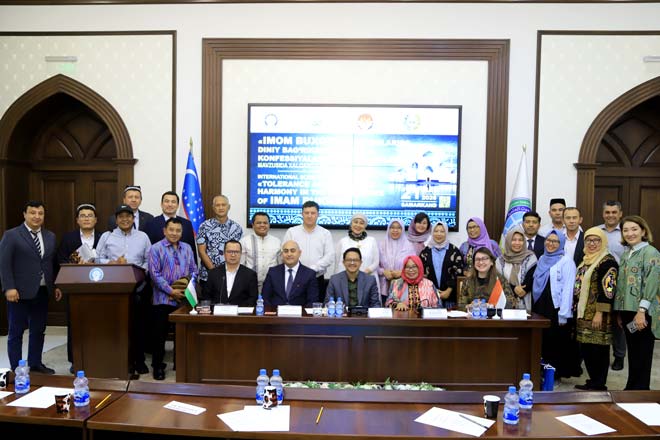
This visit marked another important step toward strengthening cooperation between the academic institutions of the two countries and expanding collaborative research on the rich scholarly legacy of Imam al-Bukhari. It also provided a valuable platform for fostering long-term academic partnerships and promoting joint initiatives in the fields of Islamic studies, cultural heritage, and intercultural dialogue.
Imam Bukhari International Scientific Research Center
Press Service