Imom Buxoriy xalqaro ilmiy-tadqiqot markazi bukhari.uz




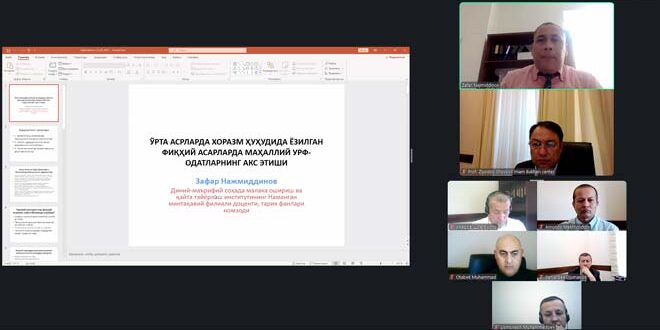
Within the framework of the “Central Asia: The Cradle of Islamic Culture and Art” scientific project, the Imam Bukhari International Scientific Research Center, in collaboration with the Research Centre for Islamic History, Art and Culture (IRCICA), hosted its latest online seminar. During the event, Dr. Zafar Najmiddinov, Associate Professor at the Namangan Regional Branch of the Institute for Professional Development and Retraining in the Religious and Educational Spheres and Candidate of Historical Sciences, delivered a lecture titled “The Reflection of Local Customs in Jurisprudential (Fiqh) Works Written in the Territory of Khwarazm During the Middle Ages.
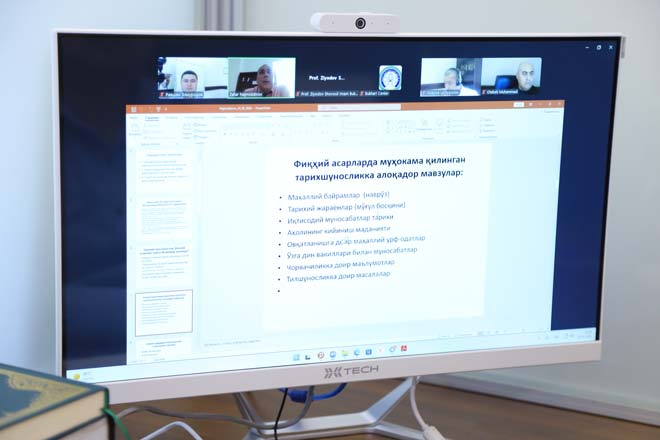
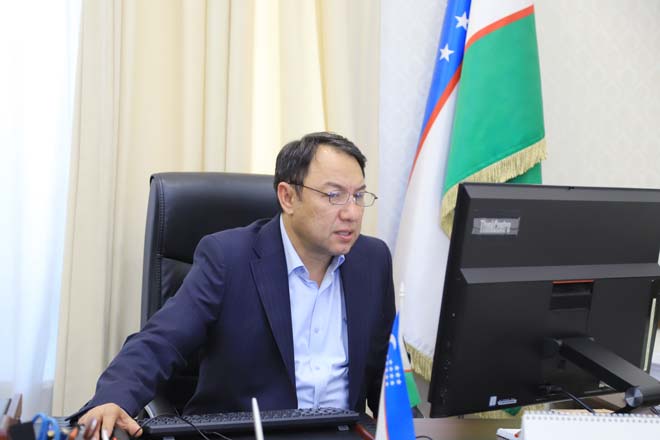
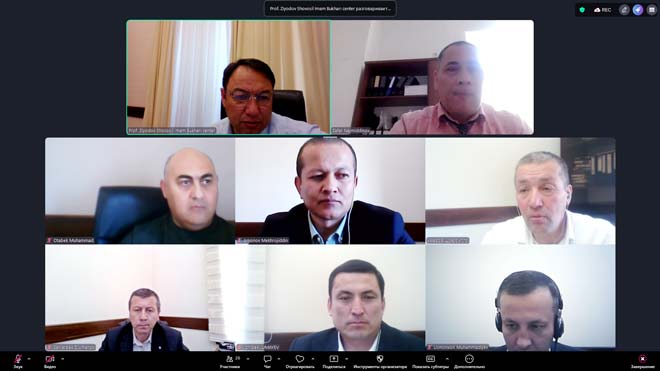
The seminar was attended by researchers from the Center, representatives of IRCICA, faculty members and students of the International Islamic Academy of Uzbekistan, the Institute of Oriental Studies of the Academy of Sciences of Uzbekistan, and the School of Hadith Studies, as well as scholars and researchers from Turkey and Kazakhstan.
The symposium shed light on a number of distinctive aspects of the legal and social life of medieval Khwarazm that have remained relatively little known to the broader scholarly community. As noted during the discussions, works on jurisprudence (fiqh) and legal opinions (fatāwā) served not only as purely religious and legal sources, but also as invaluable social documents reflecting the historical realities, everyday life, and local customs of their time.
This is clearly evidenced by the works of local authors preserved in the collections of the Academy of Sciences of Uzbekistan, particularly Qunyat al-Munya by Mukhtar al-Zahidi. The geographical references and diverse information contained in this work provide important insights into the region’s historical and social context. Furthermore, the fact that these writings were subsequently utilized as authoritative sources in other parts of the Islamic world—most notably through their incorporation into Ibn Nujaym’s al-Baḥr al-Rāʾiq—demonstrates the extensive regional influence of the Khwarazmian legal tradition.
Z. Najmiddinov also emphasized the unique value of historical, geographical, and cultural data embedded in juridical texts. By way of example, he referred to Qunyat al-Munya, which discusses the climatic characteristics of Khwarazm. Owing to its location in northern latitudes—approximately on the same parallel as the Russian city of Kazan—the region experiences significant seasonal variations in the length of daylight and nighttime hours. The work addresses legal rulings concerning the determination of prayer and fasting times under such conditions and even records fatwas regarding the observance of the precautionary noon prayer (iḥtiyaṭ al-ẓuhr), formulated in response to local environmental circumstances.
Perhaps the most intriguing aspect of the seminar was its contribution to revisiting certain long-standing assumptions in medieval historiography through the lens of juridical sources. It is commonly asserted that all jurists residing in Khwarazm prior to the Mongol invasion adhered to Mutazilite theology. However, according to the speaker’s analysis, Mutazilite doctrines are absent from some of the most authoritative sources of the period, including compilations such as Yatīmat al-Dahr. This finding suggests that the tradition of Ahl al-Sunna wa al-Jamāʿa, particularly the Ḥanafī school of law, enjoyed sustained and consistent development in the region.
Moreover, the fact that the renowned Ashʿarī theologian Fakhr al-Din al-Razi traveled to Khwarazm and engaged in scholarly debates with local jurists and theologians demonstrates that intellectual exchanges between the scholarly centers of Khurasan and Khwarazm had begun at a relatively early period.
Another noteworthy segment of the seminar focused on the reconstruction of social life and local customs through the study of juridical literature. Drawing upon specific legal opinions (fatwas), the presentation examined how everyday social relations, the practical needs of the population, and the interaction between customary practices (ʿurf) and Islamic legal norms were negotiated and harmonized. Such an approach offers a new and highly precise methodological framework for investigating social history through the critical analysis of primary sources, thereby enriching the field of historical source studies
In concluding the seminar, the researcher emphasized that the intellectual and legal environment of medieval Khwarazm was far from being isolated. Rather, it functioned as a dynamic arena of scholarly interaction in which local customs were carefully examined within the framework of Islamic law, while simultaneously serving as a vital link connecting Central Asia with other major centers of learning across the Islamic world.
The participants highly commended the findings and insights presented in the lecture, underscoring the importance of such research for deepening our understanding of national identity and for promoting the rich intellectual and cultural heritage of the region to the international scholarly community.
Imam Bukhari International Scientific Research Center
Press Service