Imom Buxoriy xalqaro ilmiy-tadqiqot markazi bukhari.uz




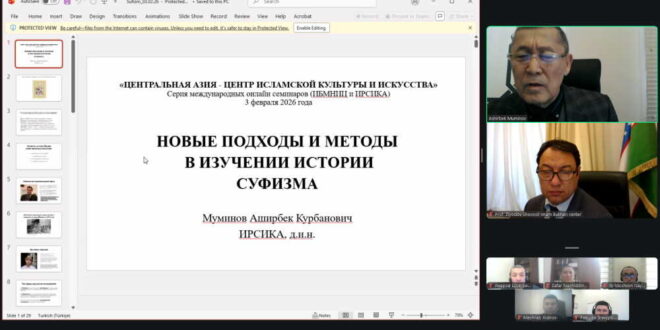
On February 3, at the Imam Bukhari International Scientific Research Center, the next online seminar was held within the framework of the scientific project “Central Asia – a Hub of Islamic Culture and Art”, organized in collaboration with the Research Center for Islamic History, Art and Culture (IRCICA). At the seminar, Dr. Ashirbek Muminov, Professor and Advisor on International Relations at IRCICA, delivered a lecture on “New Approaches and Methodologies in the Study of Sufism History”.
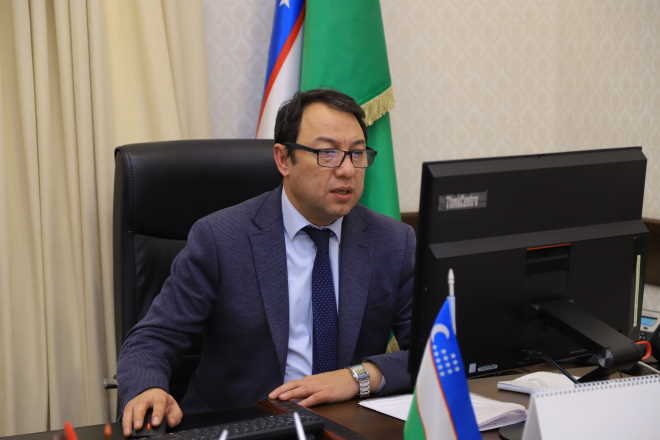
The seminar was attended by research staff of the Center, representatives of IRCICA, scholars from the International Islamic Academy of Uzbekistan, the Imam Maturidi and Imam Termizi International Scientific Research Centers, the Institute of Oriental Studies of the Uzbekistan Academy of Sciences, the Tashkent Islamic Institute, as well as faculty members and students from higher education institutions in Samarkand and Bukhara, and researchers from Turkey, Egypt, and Kazakhstan. A formal academic English translation:
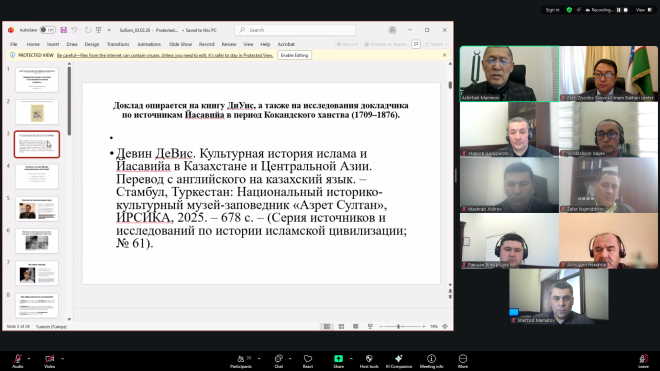
In the lecture, the speaker critically analyzed traditional perspectives on the study of Khoja Ahmad Yasavi’s legacy as well as approaches characteristic of the Soviet period, emphasizing the need for new, comprehensive, and source-based methodologies in researching the history of Sufism. It was noted that over the past approximately 80–90 years, Yasavi’s teachings have been studied in a limited manner, primarily through his work Diwan-i Hikmat, while other important manuscript sources related to the Khoja Ahmad school have largely remained outside scholarly circulation.
As supporting evidence, the lecturer highlighted that this work was published multiple times in Kazan, Istanbul, Bukhara, and Tashkent at the end of the 19th and the beginning of the 20th centuries, with differences in both the number and content of the aphorisms in each edition. For instance, the first printed editions by Iosif Gotvald contained 65–70 aphorisms, whereas later editions included over 140. This indicates the need to reconsider, from a scholarly perspective, the view of Diwan-i Hikmat as a single, immutable text.
Furthermore, it was highlighted, based on scholarly sources, that Ahmad Yasavi’s personality represents a multifaceted figure: not only a Sufi master but also a historical personality, a national hero, and a sacred symbol in the spiritual memory of the people. It was emphasized that Soviet-era studies linking Yasavi’s teachings to ‘heterodox Islam’ forms differing from official Islamic doctrine or to remnants of shamanism or Zoroastrianism were not academically substantiated.
The lecture also addressed another important issue: the disconnect between Turkology and Iranian studies (the disciplines studying the languages, history, and cultures of Turkic- and Iranic-speaking peoples) in researching Yasavi’s teachings. Professor Muminov noted that by bridging these fields, it is possible to conduct an objective study of the real history and mechanisms of the spread of Islamic culture in Central Asia.
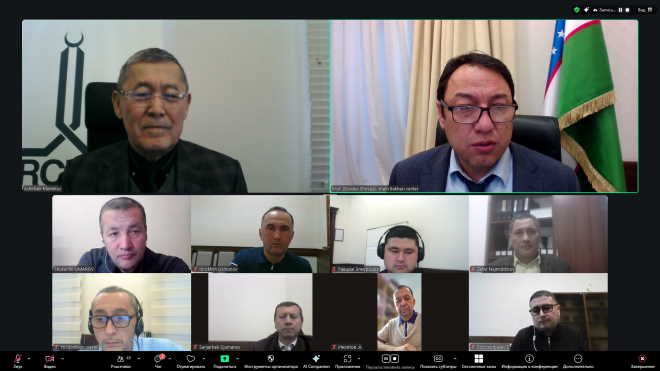
At the conclusion of the seminar, it was particularly emphasized that the history of Sufism is closely linked to the spiritual heritage of the peoples of Central Asia, the development of Islamic civilization, and the region’s historical identity. Participants noted the importance of bringing new manuscripts related to Yasavi’s legacy into scholarly circulation, coordinating international research, and expanding cooperation.
Imam Bukhari International scientific Research Center
Press Service