Imom Buxoriy xalqaro ilmiy-tadqiqot markazi bukhari.uz




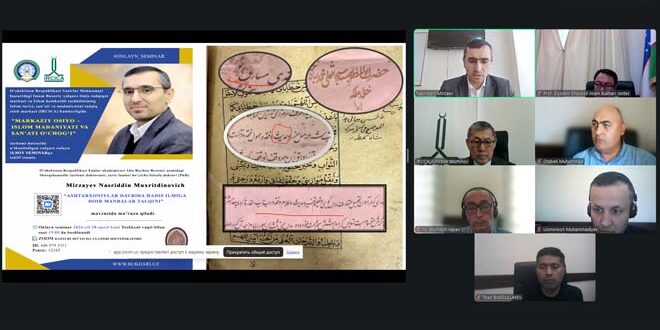
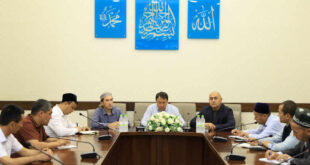
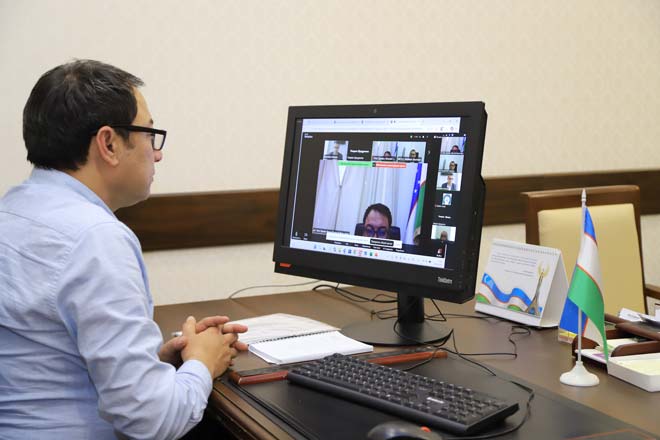
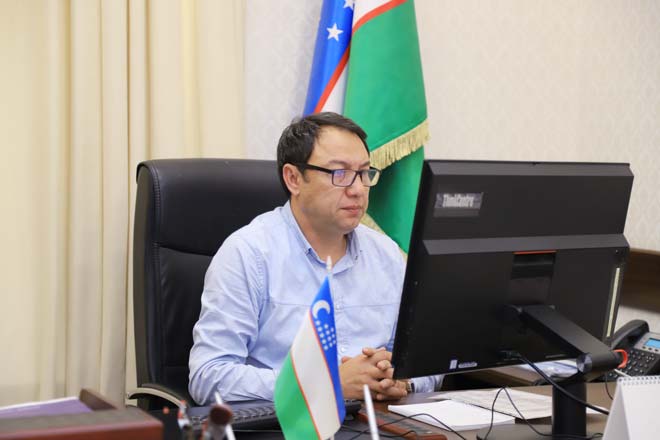
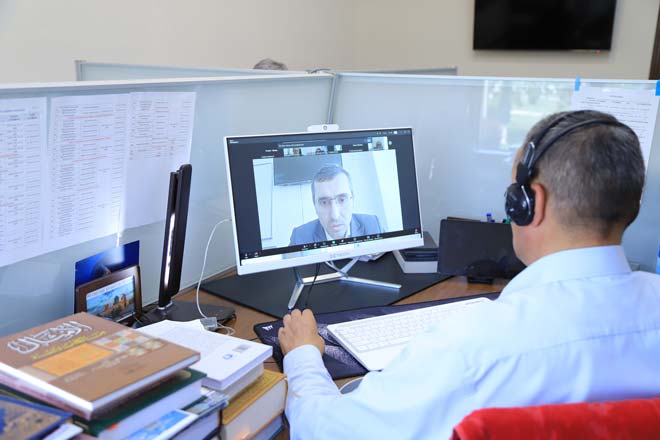
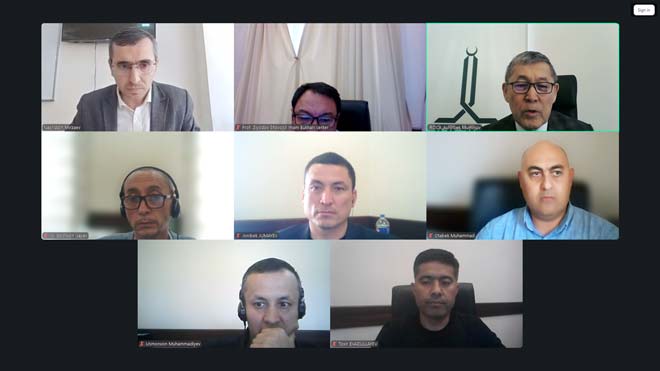
On April 28, an online seminar was held at the Imam Bukhari International Scientific Research Center in cooperation with the Research Centre for Islamic History, Art and Culture (IRCICA) within the framework of the research project “Central Asia as a Cradle of Islamic Culture and Art”.
At the seminar, Nasriddin Mirzayev, a doctoral researcher at the Abu Rayhan Beruni Institute of Oriental Studies of the Academy of Sciences of the Republic of Uzbekistan and a Doctor of Philosophy (PhD) in History, delivered a presentation entitled “The Interpretation of Sources on Hadith Studies in the Ashtarkhanid Period.”
The seminar was attended by the Center’s researchers, representatives of IRCICA, scholars from the International Islamic Academy of Uzbekistan, the Bahauddin Naqshband Research Center, the Institute of Oriental Studies of the Academy of Sciences of Uzbekistan, and the Tashkent Islamic Institute, as well as teachers and students of the Hadith School, alongside researchers from Turkey and Kazakhstan.
The event shed light on aspects of the scholarly environment of Movarounnahr during the Ashtarkhanid period that had not previously been widely known to the public. As noted, the intellectual life of Bukhara at that time was not confined to a local framework. This is clearly evidenced by more than eighty rare manuscripts preserved in the collections of the Academy of Sciences of Uzbekistan and the library of the Muslim Board of Uzbekistan, including copies of Mishkāt al-Maṣābīḥ. Among them are numerous manuscripts copied in Shahjahanabad, Lahore, Delhi, and Kashmir, which were later brought to Bukhara. This, in turn, indicates the existence of active scholarly exchange between Central Asia and Mughal India during that period.
Mirzayev paid particular attention to the distinctive legal authority of waqf documents. In the endowment deeds (waqfiyyas) related to the Mirakon and Mirzo Ulugh Beg madrasas, the conditions governing the preservation of books and their use were strictly regulated.
One of the most noteworthy aspects is the system for distributing waqf revenues. For instance, according to the waqfiyya of the Mavlono khānaqāh, a portion of the income was allocated not only to the khaṭīb and imām, but also to the preparation of free meals for the needy (a form of social welfare) and to the services of cooks. Moreover, strict anti-corruption regulations were enforced in the management of waqf property: for example, mutawallīs (trustees) were prohibited from receiving any additional remuneration from the endowment’s income under any pretext.
Another highlight of the seminar was the discussion of the ijāza tradition. Using the example of a rare ijāzanāma dated 1088/1678, the presentation demonstrated how teacher–student relations in the science of hadith ensured the accuracy and reliability of transmitted knowledge. A student would attend the lessons of a master and not merely listen, but also compare his own manuscript word for word with the teacher’s original copy (muqābala), ultimately obtaining full authorization. This process guaranteed scholarly integrity and a high degree of textual precision.
At the conclusion of the seminar, the researcher formulated the following conclusion: the scholarly environment of the Ashtarkhanid period was not a closed system; rather, it emerged as an active hub within a global network linking Rūm (Anatolia), Iran, and Central Asia.
The participants highly appreciated the findings presented in the lecture, emphasizing that such research plays an important role in fostering a deeper understanding of national identity and in promoting the rich spiritual and intellectual heritage of the region to the wider world.
Imam Bukhari International Scientific Research Center
Press Service