Imom Buxoriy xalqaro ilmiy-tadqiqot markazi bukhari.uz




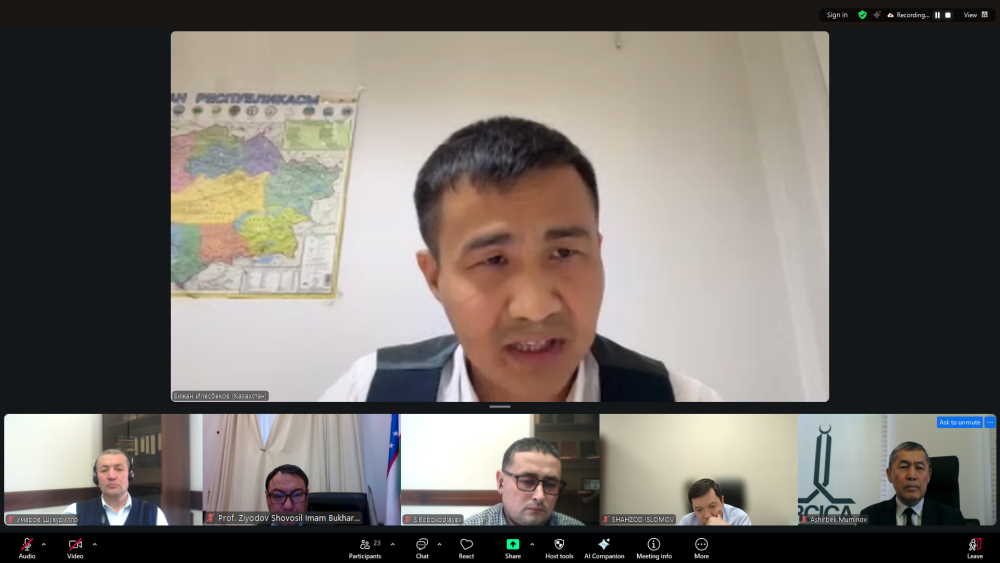
On November 19, the Imam Bukhari International Scientific Research Center, in collaboration with the Research Center for Islamic History, Art, and Culture (IRCICA), held the latest online seminar within the framework of the scientific project “Central Asia – A Hub of Islamic Culture and Art.” During the seminar, Bijan Ilesbekov, Senior Lecturer at the Department of Islamic Studies, Nur-Mubarak Egyptian Islamic Culture University, Kazakhstan, delivered a presentation titled “The Religious and Educational Activities of Ahmad ibn Mansur Ispijobi in Samarkand”.
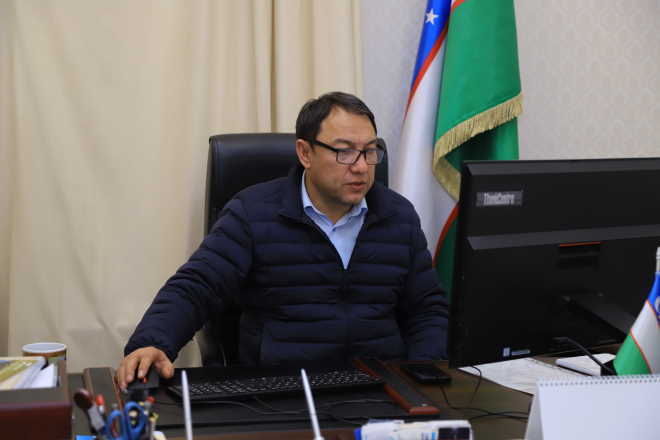
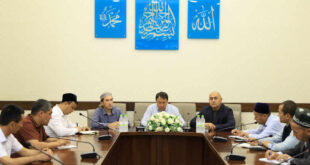
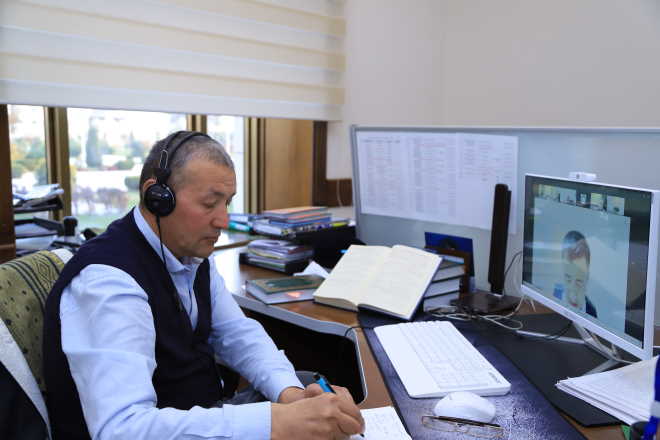
The seminar was attended by research fellows from the Center, representatives of IRCICA, scholars from the International Islamic Academy of Uzbekistan, the Imam Maturidi and Imam Termiziy International Scientific Research Centers, the Institute of Oriental Studies of the Uzbekistan Academy of Sciences, the Tashkent Islamic Institute, as well as faculty members and students from higher education institutions in Samarkand and Bukhara. Researchers from Turkey, Egypt, and Kazakhstan also participated in the event.
Bijan Ilesbekov focused on the activities of Ahmad ibn Mansur Ispijobi, a prominent scholar from Movarounnahr (Ispijob), in Samarkand. According to the scholar, during the 9th–10th centuries, Samarkand had developed into a major center for fiqh, hadith, kalam, and educational instruction, and Ispijobi emerged as one of the distinguished scholars of this environment. His scholarly legacy gained recognition particularly for his contributions to Qur’anic studies, hadith transmission, and doctrinal (aqidah) issues. Through the school he established in Samarkand, Ispijobi trained numerous students and further enhanced the city’s religious and educational prestige.
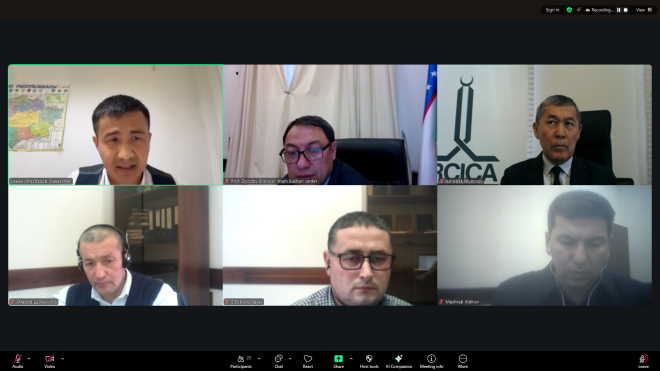
During the presentation, the speaker highlighted Ispijobi’s scholarly activities and paid particular attention to the school of Imam Maturidi, which played a decisive role in the development of kalam (Islamic theology) in Samarkand at that time.
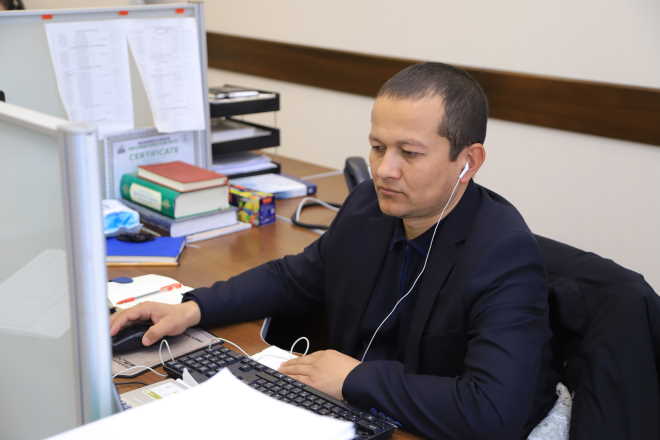
According to him, Ispijobi made a significant contribution to the development of scholarly discourse, critical debate, and evidence-based doctrinal analysis characteristic of the Maturidi school within the intellectual environment of Samarkand. Some of his views align closely with those of Maturidi, while in certain matters they reflect his own distinctive scholarly approach.
The vibrant intellectual environment of Samarkand at that time, shaped by great theologians like Maturidi, provided the stimulus for Ispijobi’s scholarly maturation and achievements.
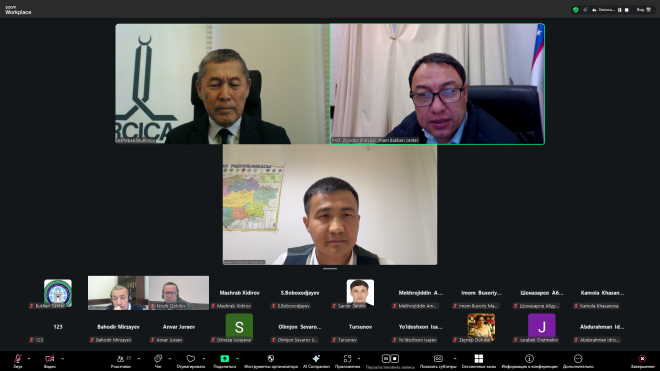
As noted, the religious and educational environment of Samarkand not only served as the foundation for historical development but also remains a rich scholarly and inspirational resource for contemporary researchers. Ispijobi’s activities stand out as a significant link within this vast heritage.
The seminar featured lively discussions, the presentation of additional historical sources, surviving copies of scholars’ works, and a question-and-answer session concerning Ispijobi’s role within the academic environment of Samarkand.
Imam Bukhari International scientific Research Center
Press Service